Nothing beats the “unplugged” feeling of freedom we experience when casting off for a day of fun and adventure on the water. However, safe navigation requires that we abide by basic right-of-way protocols, commonly referred to as the “rules of the road.” This article will summarize the essential rules, especially as they apply to recreational boaters, and walk you through other key areas of knowledge and the equipment you need for a safe and courteous experience on the water.
- The Rules of the Road
- Navigation Marks and Buoys
- Speed and Wake
- Sound Signals
- Navigation Lights
- Personal Flotation Devices (PFDs)
- Fire Extinguishers
- Sound-Producing Devices
- Visual Distress Signals
- Emergency Cutoff Switch (ECOS)
- Environmental Regulations
- Communication and Planning
- Emergency Procedures
- Respect and Courtesy
- FAQs
The Rules of the Road
The Inland and International Navigation Rules (COLREGS) establish right-of-way responsibilities between vessels. Two key terms apply throughout: the give-way vessel is required to take early and substantial action to stay clear; the stand-on vessel is required to maintain course and speed so the give-way vessel can predict its position. Both vessels share responsibility for collision avoidance — the stand-on vessel must take action if a collision becomes inevitable.
- Power vs. Sail: Power-driven vessels must give way to sailing vessels under sail, except when the sailboat is overtaking.
- Overtaking: Any vessel overtaking another must keep clear of the vessel being overtaken, regardless of which type either vessel is.
- Head-on Situation: When two power-driven vessels meet head-on, both should alter course to starboard (right) to pass on the port (left) side — the same as meeting oncoming traffic on a road.
- Crossing Situation: When two power-driven vessels are crossing, the vessel that has the other on its starboard (right) side is the stand-on vessel and should maintain course and speed. The vessel with the other on its port (left) side is the give-way vessel and must take action to avoid.
Navigation Marks and Buoys
- Red Right Returning: When returning from sea (or heading upstream), keep red buoys and markers on your right (starboard) side. The memory aid: Red Right Returning.
- Green Buoys: Keep green buoys on your left (port) side when returning from sea or heading upstream.
- Channel Markers: Stay within marked channels to avoid running aground. When going out to sea or downstream, the colors reverse: red on your port (left) side, green on your starboard (right) side.
Speed and Wake
- Speed Limits: Observe posted local speed limits and operate at a safe speed that allows you to stop or take evasive action in time, considering traffic density, visibility, and proximity to shore.
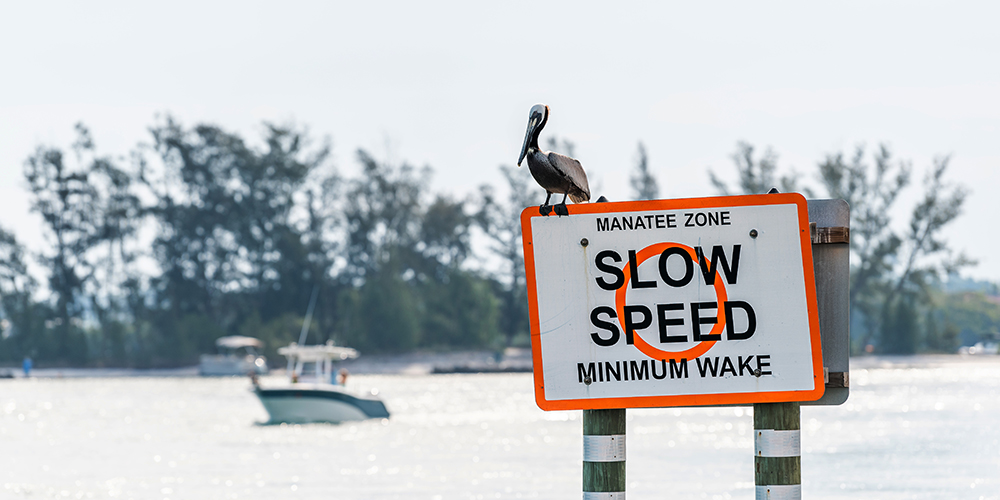
- No-Wake Zones: Reduce speed to avoid creating a wake in designated no-wake zones, near docks, marinas, and swimming areas. You are responsible for damage caused by your wake, even in areas without a posted speed limit.
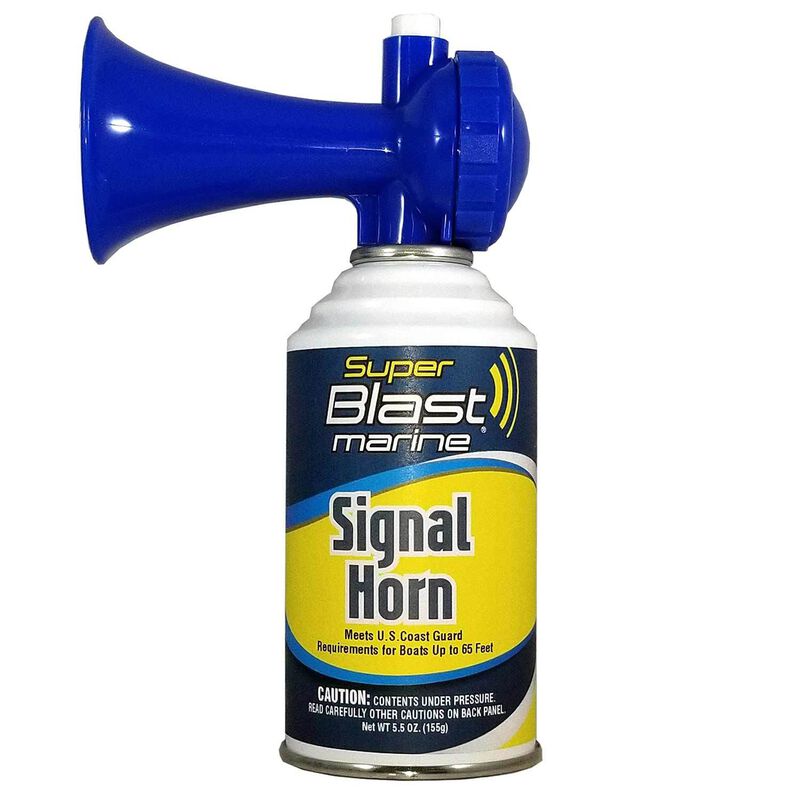
Handheld air horns are an easy means to signal your intentions.
Sound Signals
- One Short Blast: Indicates altering course to starboard.
- Two Short Blasts: Indicates altering course to port.
- Three Short Blasts: Indicates operating in reverse.
- Five Short Blasts: Used as a danger signal when intentions are not understood or there is doubt about safety. If you hear five short blasts from another vessel, take immediate action to determine what is happening and avoid a collision.
Navigation Lights
For a complete overview of navigation light rules and help with selecting navigation lights for your boat, see our West Advisor article Navigation Light Rules.
- Running Lights: Use navigation lights between sunset and sunrise and during any period of restricted visibility, including fog, rain, and haze. Failure to display proper running lights is a common USCG citation.
- When Anchoring: Display an all-round white light when anchored in a non-designated anchoring area so other vessels can see you.
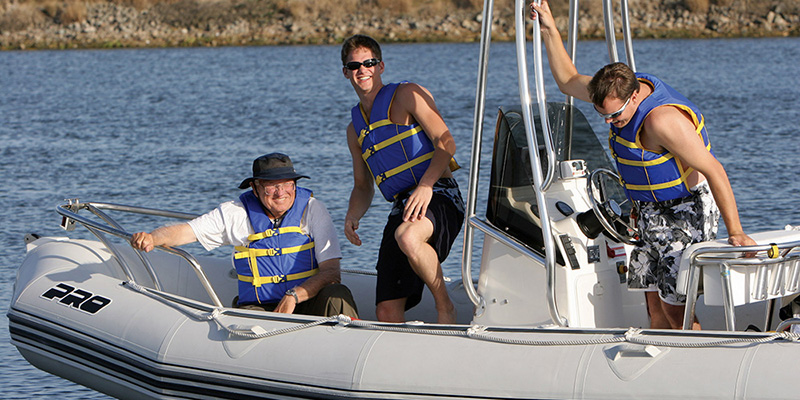
West Marine Runabout Life Jackets (shown) are a great choice for a variety of boating activities.
Personal Flotation Devices (PFDs)
USCG carriage requirements for PFDs (life jackets) for recreational vessels are based on vessel length.
Vessels Less than 16 feet (including canoes and kayaks):
- One Type I, II, III/Level 70, or Type V PFD per person.
Vessels 16 Feet and Greater:
- One Type I, II, III/Level 70, or Type V PFD per person.
- Plus one Type IV throwable device.
PFDs must be Coast Guard-approved, in serviceable condition, wearable by the intended user, and readily accessible. Children under 13 must wear a properly fitted PFD at all times while underway on a recreational vessel in most states. For help selecting life jackets for you, your family, and your crew, see our West Advisor articles How to Select a Life Vest and Overview of USCG Requirements for PFDs.
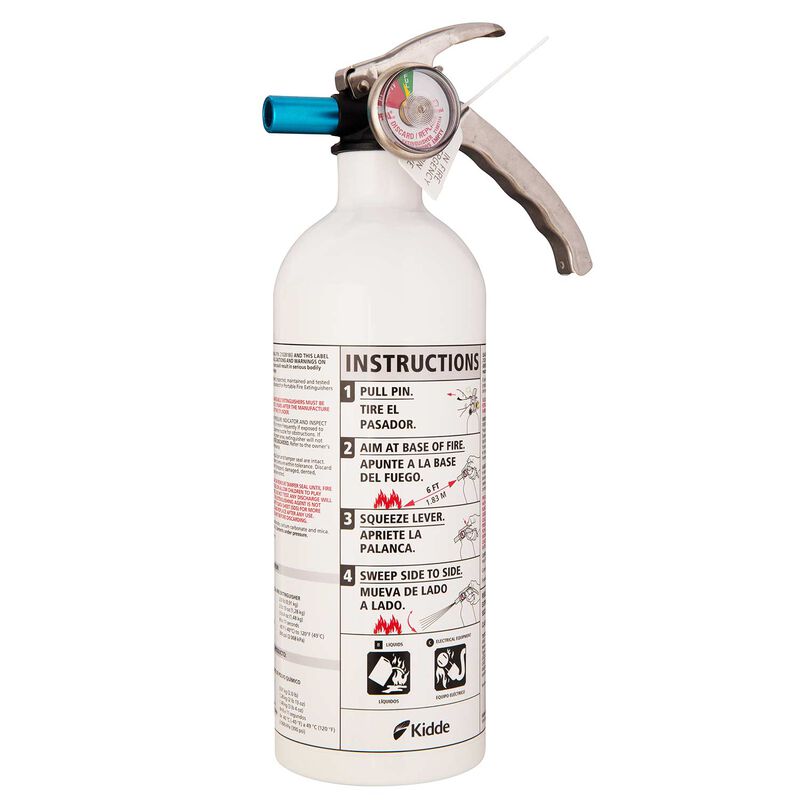
Offered in a variety of sizes, Kidde Dry Chemical Fire Extinguishers are an easy way to satisfy USCG requirements.
Fire Extinguishers
The minimum USCG requirements for fire extinguishers are based on vessel length.
- Less than 26′: One 5-B size extinguisher.
- From 26′ to less than 40′: Two 5-B extinguishers.
- From 40′ to 65′: Three 5-B extinguishers.
- Greater than 65′: One or more 20-B. Number required depends on gross tonnage.
Fire extinguishers are not required for outboard-powered pleasure boats less than 26′ in length, not carrying passengers for hire, without permanently-installed fuel tanks, that do not have spaces where explosive or flammable gasses or vapors can collect.
Note: In 2022, new fire extinguisher regulations took effect. How the new regulations affect you depends on the model year of your boat. For a discussion of how to choose a fire extinguisher (and how the new regulations may affect carriage requirements for your boat), see our West Advisor article Selecting Fire Extinguishers.
Sound-Producing Devices
- Vessels Less than 26′: Horn or whistle recommended to signal intentions or position.
- Vessels 26′ to Less than 65′: Horn or whistle required to signal intentions or position.
- Vessels 65′ to Less than 165′: One bell and one whistle or horn required to signal intentions or position.
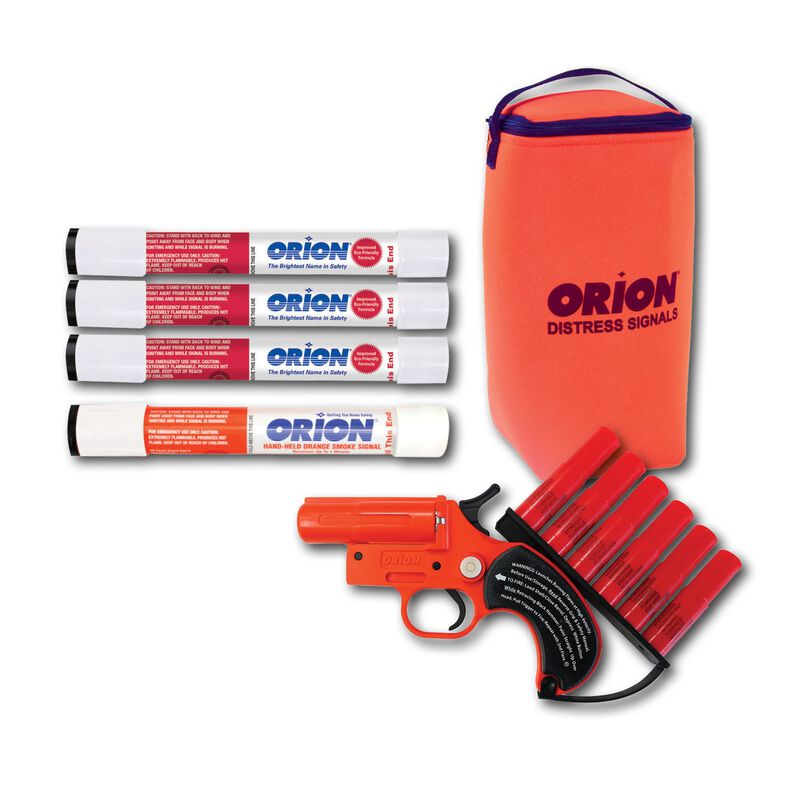
Orion’s Blue Water Alert Locate Signal Kit is a good choice for inland and near-shore boaters.
Visual Distress Signals
Satisfy USCG requirements with visual distress signals appropriate for your type of boating. Visual distress signals include traditional pyrotechnic devices and electric visual distress signals (EVDS) such as ACR Electronics’ ResQFlare LED Electronic Distress Flare and Orion’s Floating Locator Electronic SOS Beacon Kit. While basic USCG-approved flares are appropriate for near-coastal and inland use, we suggest that boaters who venture offshore carry SOLAS-grade flares, which are more visible at greater distances and meet international offshore standards. For an overview of USCG requirements, see our West Advisor article Selecting Visual Distress Signals.
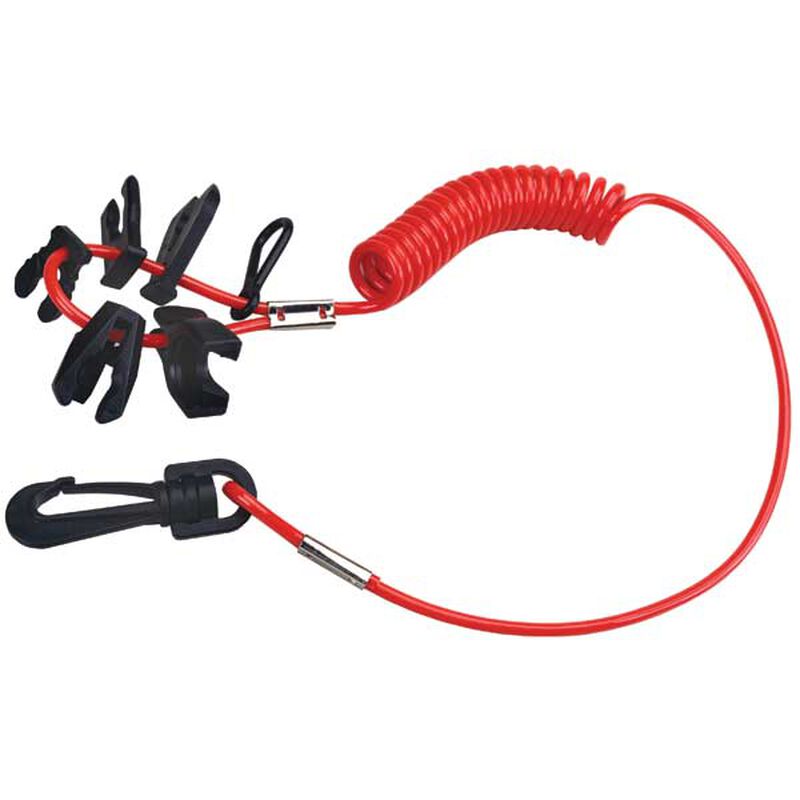
This cutoff switch lanyard includes a variety of cutoff switch keys to fit your existing engine cutoff switch.
Emergency Cutoff Switch (ECOS)
Since April 1, 2021, operators of certain boats under 26 feet long are required to use an emergency cutoff switch (ECOS) device, commonly referred to as an engine kill switch. The ECOS stops the engine automatically if the operator falls overboard or is thrown from the helm. To determine if you and your boat are subject to this requirement, see our West Advisor article Get Connected — It’s The Law!
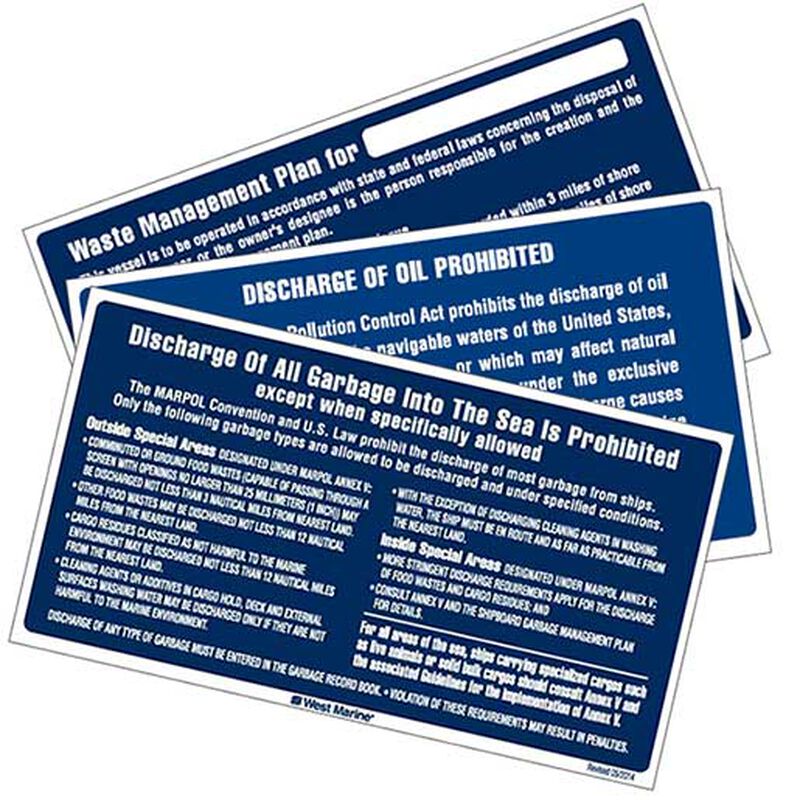
Boats over 26 feet long are required to display waste, oil, and garbage placards.
Environmental Regulations
- Pollution: Do not discharge oil, garbage, or sewage into the water. Boats over 26 feet long must display required waste, oil, and garbage placards.
- Marine Protected Areas: Respect restricted zones and marine protected areas. Anchoring, fishing, or transiting certain protected zones may be prohibited or restricted.
Communication and Planning
- VHF Radio: Carry a handheld or fixed-mount VHF marine radio to communicate with other boaters and the Coast Guard. Monitor Channel 16 — the hailing and distress channel — whenever underway. Modern VHF radios with DSC (Digital Selective Calling) can transmit your position automatically in an emergency.
- Float Plan: Before casting off, leave a float plan with someone you trust on shore. It should include your departure time, destination, description of the vessel, persons on board, and expected return time. If you don’t return when expected, your contact can alert the Coast Guard.
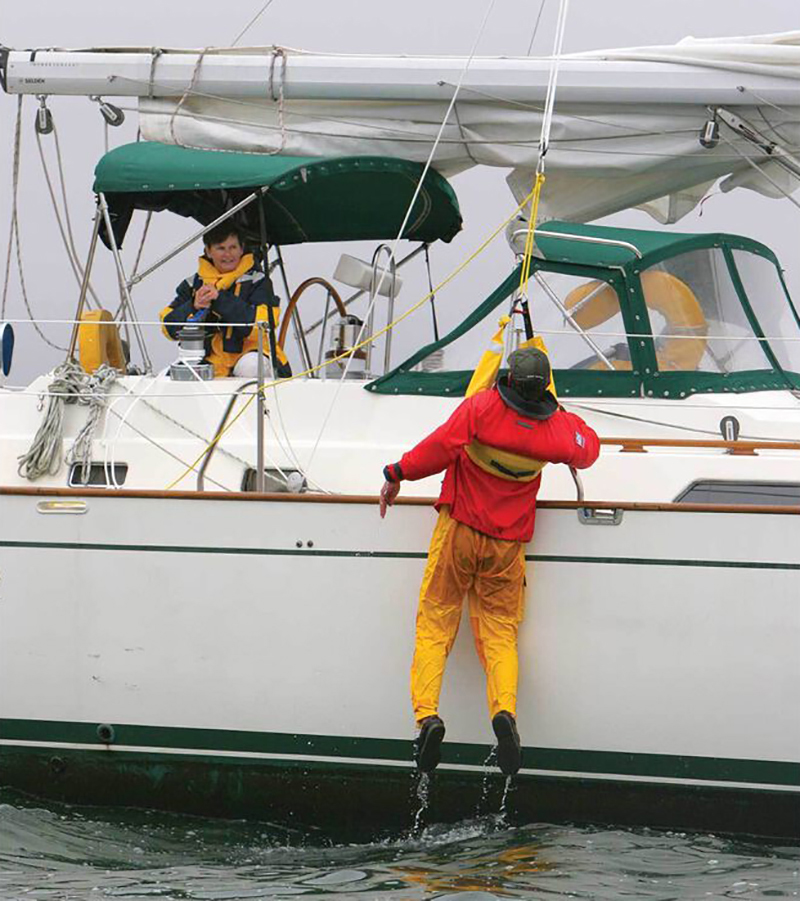
Lifesling rescue sling in use.
Emergency Procedures
- Man Overboard: Have a procedure in place for recovering someone who falls overboard. Immediately shout “Man Overboard,” assign someone to keep eyes on the person in the water without looking away, throw a Type IV throwable device toward them, and maneuver to recover. Keep a Lifesling and Type IV throwable flotation onboard in accessible locations ready for immediate use.
- Fire: Know the location and operation of all fire extinguishers before you need them. Practice with the crew so everyone aboard knows where they are and how to use them.
- Distress: Know how to signal for help using visual distress signals and how to make a distress call on a VHF radio. Modern VHF radios with DSC can send a distress call with GPS position at the press of a single button. For more on this, see our West Advisor article DIY: Making a Mayday Call on Your VHF Radio.
Respect and Courtesy
- Yield to Larger Vessels: Be aware that larger vessels have limited maneuverability and longer stopping distances. Give them room and do not assume they can move or stop to avoid you.
- Anchoring: Anchor in designated areas without obstructing channels or traffic. Arrive with adequate scope for the depth and swing room for conditions.
- Noise: Avoid excessive noise that might disturb wildlife, residents near the water, or other boaters. Many anchorages and marinas have quiet hours that are both courtesy standards and local regulations.
Frequently Asked Questions
What does “give-way” and “stand-on” mean?
These are the Navigation Rules’ terms for right-of-way. The give-way vessel is required to take early and substantial action to stay clear — alter course, reduce speed, or stop. The stand-on vessel is required to maintain its course and speed so the give-way vessel knows where it will be. If the give-way vessel fails to act and a collision becomes inevitable, the stand-on vessel must also take action. Both vessels always share responsibility for avoiding collision.
Who has the right of way when a powerboat and sailboat meet?
In most situations, a sailboat under sail (not using its engine) is the stand-on vessel and the powerboat must give way. The exception: if the sailboat is overtaking the powerboat, the powerboat is the stand-on vessel. Also, large vessels constrained by their draft, vessels restricted in their ability to maneuver, and vessels engaged in fishing have right of way over both powerboats and sailboats in many situations. Size alone does not automatically confer right of way — the specific situation determines which vessel gives way.
What fire extinguisher do I need on my boat?
The minimum requirement for most recreational boats under 26 feet is one 5-B rated dry chemical extinguisher, unless the boat meets the outboard exception: outboard-powered, no passengers for hire, no permanently installed fuel tanks, and no enclosed spaces where vapors can collect. From 26 to less than 40 feet, two 5-B extinguishers are required. Note that 2022 regulations changed the rating system and added expiration requirements — see our Selecting Fire Extinguishers article for current guidance specific to your boat’s model year.
Do I have to wear a life jacket on my boat?
Federal law requires that one USCG-approved PFD be on board for each person. However, most states require children under 13 to wear a PFD at all times while underway on a recreational vessel. Some states extend this requirement to older ages. Beyond legal requirements, wearing a life jacket is the single most effective thing you can do to survive a fall overboard — the Coast Guard reports that in the majority of recreational boating drownings, the victim was not wearing a PFD. Inflatable belt-pack PFDs are the most comfortable option for adults who prefer not to wear a traditional foam jacket.
What does “Red Right Returning” mean?
It’s the mnemonic for the US lateral buoyage system. When you are returning to port from sea (heading inland, or heading upstream on a river), keep red markers and buoys on your starboard (right) side and green ones on your port (left) side. Going in the opposite direction (heading out to sea or downstream), red is on your left and green is on your right. If you forget which direction you’re traveling in relation to the marker system, red daymarks are triangle-shaped (think: triangle = right = return) and green daymarks are square-shaped.
We’re Here to Help
Online and in our stores, West Marine customers find the products and the advice they need. Our friendly and knowledgeable crew members are always ready to help. Find your nearest West Marine store.
Related Articles
- Navigation Light Rules
- How to Select a Life Vest
- Overview of USCG Requirements for PFDs
- Selecting Fire Extinguishers
- Selecting Visual Distress Signals
- DIY: Making a Mayday Call on Your VHF Radio
- Get Connected — It’s The Law!
- U.S. Coast Guard Required Equipment for Recreational Vessels
- How to File a Boating Float Plan