A float plan is one of the simplest and most effective safety steps a boater can take. It costs nothing, takes ten minutes, and gives rescue services the information they need to find you if something goes wrong. Filing one before every trip should be as automatic as checking your fuel level.
- What Is a Float Plan?
- Should All Boaters File One?
- How to Make a Float Plan
- What Information Does a Float Plan Need?
- Who Should You Leave It With?
- What Else Can You Do to Stay Safe?
- FAQs
What Is a Float Plan?
A float plan details where you’re headed on your boat, who is with you, your itinerary, and other key information that can help rescue services find you in an emergency. You leave your completed float plan with an emergency contact on shore before you depart. If you aren’t back by your expected return time, your emergency contact can alert rescue services and hand over your float plan — giving them valuable information to start their search immediately rather than reconstructing your plans from scratch.
The difference between a search that starts with a float plan and one that doesn’t can be measured in hours. A search beginning with known departure point, destination, vessel description, and number of people aboard is fundamentally different from one beginning with "they went out this morning and haven’t come back." The float plan is that difference.
Should All Boaters File a Float Plan?
Short answer: Yes. Long answer: Yes, 100%. A float plan doesn’t take long to fill out and helps give you and your crew peace of mind on the water. Like all safety precautions, it’s much better to have it and not need it than need it and not have it.
This applies to day trips as much as overnight passages. Most recreational boating accidents happen in familiar waters on short trips — the conditions that make boaters feel a float plan isn’t necessary are exactly the conditions in which most incidents occur.
How to Make a Float Plan
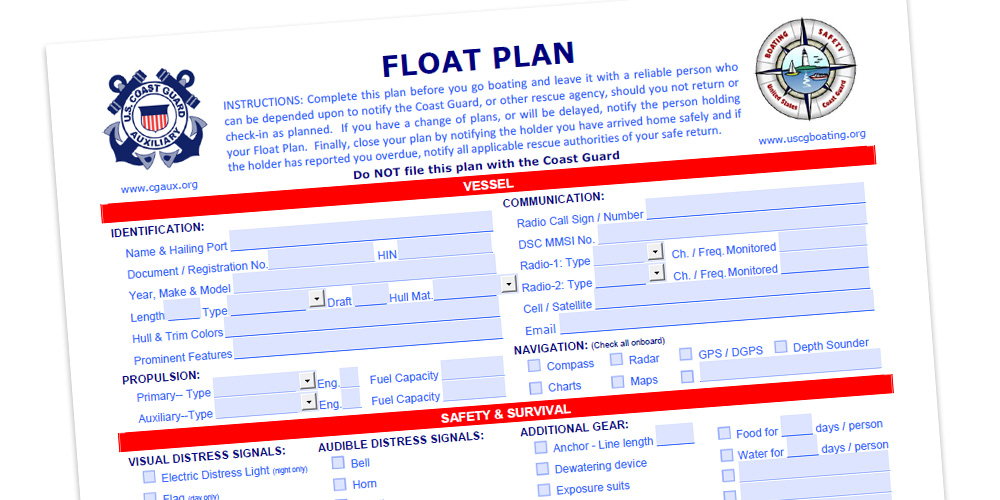
Your best bet is to use the USCG Float Plan. This document is an editable PDF — type in all the required information, save it, and share it with your emergency contact before departure. The document also includes instructions for your emergency contact explaining what to do if you don’t return on time.
The US Coast Guard also offers a float plan option through the Coast Guard’s Float Plan Central service at floatplancentral.org, which allows you to file digitally and have it accessible to your emergency contact online.
What Information Does a Float Plan Need?
Your float plan should cover four main categories: who, what, where, and when — all of which are covered in the USCG float plan.
Who are all the passengers on your boat? Name everyone aboard along with their ages, gender, and any medical conditions. Include phone numbers and home addresses for all passengers as well.
What type of boat do you have? Detail the year, make, model, color, hull material, registration number, and propulsion type. Include any safety equipment aboard — EPIRBs, flares, life raft — that rescue services would look for.
Where is your destination and what are your planned stops along the way? List the marina or launch ramp you’ll depart from and any intermediate stops. If you’re using a tow vehicle, include the license plate number and where it’s parked — this helps authorities confirm whether you have launched and returned.
When are you expected to depart and return? Set a specific overdue time with your emergency contact — the time at which they should make the call to rescue services if they haven’t heard from you. If you have a change of plans or are running behind, contact your emergency contact immediately to update your expected return.
When you return safely, close your float plan by contacting your emergency contact and letting them know you’re back. If your emergency contact has already reported you overdue, immediately notify all applicable rescue authorities of your safe return so search resources can be stood down.
Who Should You Leave Your Float Plan With?
Your emergency contact should be a person who will actually notice if you don’t come back — not someone who might not check their phone until the next day. Good choices: a spouse or family member at home, a friend who knows you’re going out, or the marina dockmaster if they know you and your boat. Whoever it is, make sure they understand what to do with the float plan if your overdue time passes and they haven’t heard from you: call the US Coast Guard at VHF Ch. 16 or by phone at 1-800-424-8802, or contact local marine patrol.
Do not file your float plan with the Coast Guard or a marina as a substitute for leaving it with a personal contact. The float plan only activates a search when a real person who knows you decides something is wrong and makes the call.
What Else Can You Do to Stay Safe?
Filing a float plan is a great practice, but it should only be part of your safety routine before you cast off. Our Safe Boating Checklist details pre-departure tasks, ways to stay safe while on the water, and what you should do when you return. We recommend running through it before every departure. A few important items:
- Check weather forecasts, tides, and currents
- Make sure your blower fans, bilge pump, auto switch, and alarms are working
- Make sure you have appropriate-size life jackets for all passengers and make sure all children onboard wear them at all times
- Turn on your VHF radio and show passengers how to select Ch. 16 and transmit a Mayday in an emergency
- Check operation of all navigation and running lights
- Ensure that one anchor and rode is ready for immediate use
Frequently Asked Questions
Is filing a float plan required by law?
No — float plans are voluntary in the United States. The Coast Guard does not require them, and there is no penalty for not filing one. That said, filing one is one of the most effective things you can do to improve your odds of being found quickly if something goes wrong. Think of it the way you think about wearing a life jacket offshore: not legally required in all cases, but the right call every time.
What is the difference between a float plan and a VHF DSC call?
A float plan is a document you file with a person on shore before you leave. A DSC (Digital Selective Calling) distress call is an automated emergency signal transmitted from a VHF radio with a registered MMSI number, which sends your vessel identity and GPS position to the Coast Guard instantly when you press the distress button. The two serve different purposes: the float plan helps rescuers find you if you go missing and can’t call for help; DSC alerts the Coast Guard immediately when you activate it. Every boater should have both — a registered VHF DSC radio and a float plan filed before departure.
What should my emergency contact do if I don’t return on time?
The USCG Float Plan includes instructions for your emergency contact, but the basic steps are: wait until the agreed overdue time has passed, then call the US Coast Guard on VHF Ch. 16 or at 1-800-424-8802 (or local marine patrol, depending on the waterway). Have the float plan ready — the dispatcher will ask for the vessel description, last known position, number of people aboard, and emergency equipment. Do not wait several hours past the overdue time hoping you’ll turn up. A search that starts earlier has a significantly better chance of a good outcome.
Can I file a float plan online?
Yes. The Coast Guard’s Float Plan Central service at floatplancentral.org allows you to create and store a digital float plan that your emergency contact can access online. This is a convenient option for frequent boaters who want a consistent format without printing and filling out a paper form each trip.
Do I need a float plan for a short trip close to shore?
Yes. Most recreational boating incidents — capsizing, mechanical failure, medical emergencies, running aground — happen in familiar, nearshore conditions. Distance from shore and trip length do not reliably predict risk. A float plan filed before a two-hour bay cruise is just as valuable as one filed before an offshore passage, because the rescue problem is the same: someone who knows you’re out needs to know when to call for help and what to tell them.
Need More Help?
From choosing the right distress signals to getting the right lifejacket or PFD, we have plenty more safety gear West Advisors that cover everything you need to stay safe on the water.

