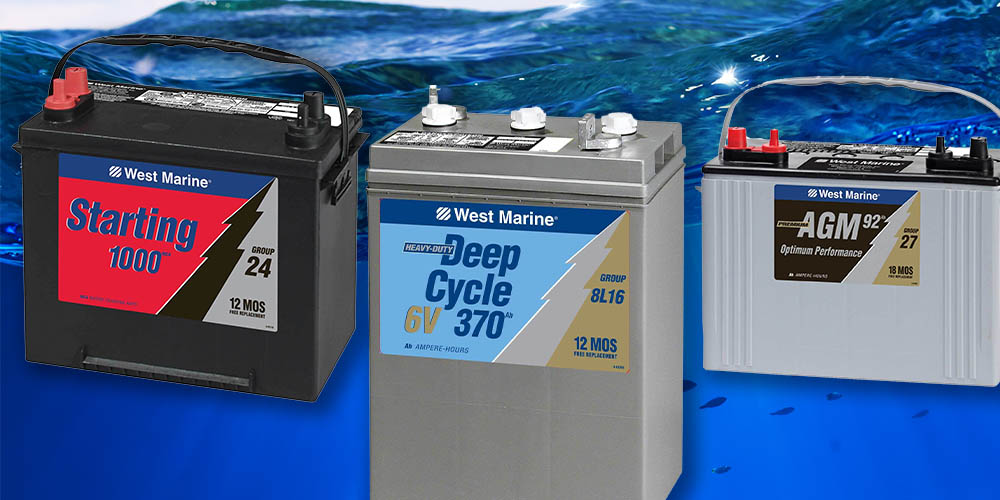
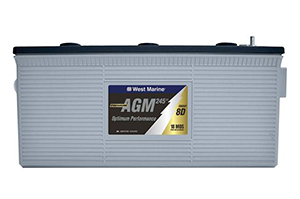
AGM Sealed Batteries are great in both deep cycle and starting applications. They charge more quickly than conventional batteries and have low 3% monthly self-discharge rates.
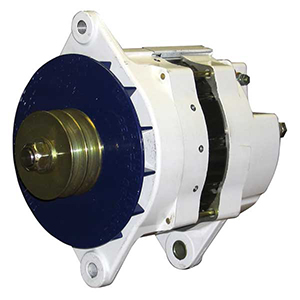
This 160A Balmar 97-Series alternator would be a good size for a 400Ah battery bank using AGM batteries (with a 40% charge acceptance rate).
Who can use an energy budget?
If you live off the grid, onboard a cruising sailboat or perhaps in an isolated mountain cabin, knowing your energy consumption is very useful. If you are planning a long cruise, you need to know, with a high level of detail, exactly how much electricity each appliance or electrical load is using. You will also want to estimate the output of all sources of electricity, your boat's engine(s), a solar array, wind generator, hydro generator, etc.
Cruising Sailors generally plan on being “engineless” for a day at a time, hoping to operate their boats with their engine running only one or two hours each day. This allows other engine-driven functions (refrigeration, watermaking) to be performed while charging batteries with the engine. Their battery storage requirements are 100% related to the time between engine-driven charges, plus the added input from other sources they utilize.
Powerboaters generally have very modest battery capacity and charging needs until they anchor in some nice spot and want to be free of engine noise and exhaust odor. Under these circumstances, they operate in “sailboat mode,” discharging their batteries deeply and periodically recharging them.
Loads like an inverter, autopilot drive unit, refrigerator and incandescent lighting have a large impact on your energy budget, so it is difficult to estimate your needs without actually adding up the loads and duty cycles to find the total consumption. Most boaters who operate on battery power (no AC generator) end up using from 60–200 amp-hours (Ah) per day. Calculate your own needs using the method shown below.
- How Much Energy Do You Use
- How Much Battery Storage Capacity Do You Need
- Sizing the Alternator
- A House Bank Example from the Real World
- Glossary of Terms
- FAQs
How much energy do you use?
Before you start replacing batteries and adding solar panels, start by analyzing your energy requirements.
How do you measure these loads, when appliances are rated in watts (which describes the work done by the electrical energy), but batteries and chargers are rated in amps or amp hours (which describes the current flowing through the device)? You can use either watts or amps, as long as you are consistent throughout the system, but it is more convenient using amps in your DC system. Fortunately, watts and amps are easily interchangeable, since Watts = Volts x Amps and Amps = Watts ÷ Volts.
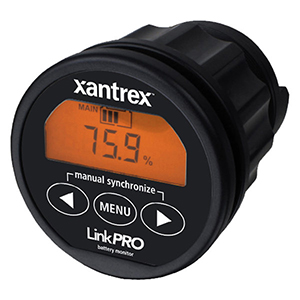
LinkPRO Battery Monitor
There is a simple way to calculate how much energy is used in a given time period (we recommend that you use 24 hours).
- Use an energy monitor, like the Xantrex LinkPRO, or LinkLITE, and let it do the calculating for you. Just turn on each appliance, one at a time, and record its electrical draw. You can also check and record the output of your solar array.
- Create an energy budget by adding up the amperages for every electrical load, and their anticipated length of use. This number, expressed in Amp-hours (Ah), determines the size of your battery banks. Examine how much energy each device consumes.
- Download our worksheet: We have a handy Electrical Budget Worksheet . Download the Excel file, plug in your numbers and start itemizing your appliance loads.
How much battery storage capacity do you need?
A proven rule of thumb is to have 3–4 times your daily energy consumption in battery capacity. That means that boats that consume 120Ah per day of energy should consider having 360–480Ah of capacity. This rule allows you to avoid damaging deep discharges, and it reduces your recharging time. For more info about batteries and battery chemistry, see our West Advisor, Selecting a Marine Storage Battery .
Sizing the Alternator
Your alternator should be sized appropriately to produce the highest amount of current your batteries can accept (their charge acceptance rate, which ranges from 25 to 40% of the battery bank’s total amp hour capacity). This gets the bank recharged as quickly as possible, minimizing the engine running time and the fuel needed to replenish the batteries. Thus, a boat with a 200Ah battery bank should be paired with an alternator that maxes-out at 50–80A.
| Extremely Approximate Battery Bank Size Rule | |
|---|---|
| 30' boat | 200Ah house bank |
| 35' boat | 300Ah house bank |
| 40' boat | 400Ah house bank |
| 45' boat | 500Ah house bank |
| 50' boat | 600Ah house bank |
An Example From the Real World
What does a completed energy budget look like? Here is Shaman's Energy Budget, completed for my Cal 40 sailboat before a 4,500-mile round trip between San Francisco Bay and Kauai. All the values I entered were recorded from my old Link 10 monitor, while running each load or group of loads.
Glossary of Terms
Amp-Hour (Ah): A unit measuring the total electrical capacity of a battery or the total energy consumed by a load over time, calculated as current in amps multiplied by the number of hours that current flows.
Charge Acceptance Rate: The maximum rate at which a battery can absorb charging current without damage, expressed as a percentage of the battery's total amp-hour capacity; this rate varies by battery chemistry and determines the practical upper limit on alternator or charger size.
Depth of Discharge (DoD): The percentage of a battery's total capacity that has been used before recharging, with most lead-acid batteries limited to 50% DoD for longevity while lithium batteries tolerate deeper discharges.
Duty Cycle: The proportion of time an electrical load is actually drawing power during a given period, used alongside a device's amperage rating to calculate its real-world energy consumption over a day.
Energy Budget: An itemized accounting of every electrical load on a boat, its amperage draw, and anticipated hours of use per day, used to calculate total daily amp-hour consumption and size a battery bank accordingly.
House Bank: The battery bank dedicated to powering lights, electronics, refrigeration, and other onboard systems, kept separate from the engine starting battery so that house loads cannot drain the battery needed to start the engine.
Self-Discharge Rate: The rate at which a battery loses charge on its own while sitting unused, typically expressed as a percentage per month; AGM batteries have notably low self-discharge rates compared to flooded lead-acid batteries.
Sizing Your House Battery Bank FAQs
Separate from engine starting batteries, a house battery bank consists of one or more deep cycle batteries that are dedicated to powering lights, electronics, windlasses and other onboard systems.
List all devices, note their amp-hour consumption, and multiply by the hours you’ll use them each day. Add a 20-30% safety margin to account for unexpected energy needs.
Lead-acid (flooded), AGM, gel, and lithium-ion batteries are common. AGM and lithium are preferred for their maintenance-free design and longer lifespan.
Higher amp-hour ratings mean longer runtime without recharging. A properly sized battery bank should meet daily needs while staying above the recommended discharge limit.
Lead-acid batteries perform best when discharged no more than 50%. Lithium-ion batteries can handle deeper discharges (up to 80%) without damaging their capacity.
Cold weather reduces available capacity, while high heat accelerates wear. Proper ventilation and insulation can mitigate these effects.
One or more methods such as alternators, solar panels, and wind turbines can be used. Output voltage from these devices must be properly regulated to match the chemistry (flooded, gel, AGM, lithium) of the batteries being charged.
Ensure compatibility by matching new batteries with the same chemistry (flooded, gel, AGM, lithium) and age as the existing ones. Reevaluate your charging system to handle the increased capacity.
We're Here to Help!
At West Marine, we’re here to help you make every moment on the water count. With expert advice and premium gear, we’ve got more of everything you need for unforgettable boating adventures. Use our store finder to locate a West Marine store near you.