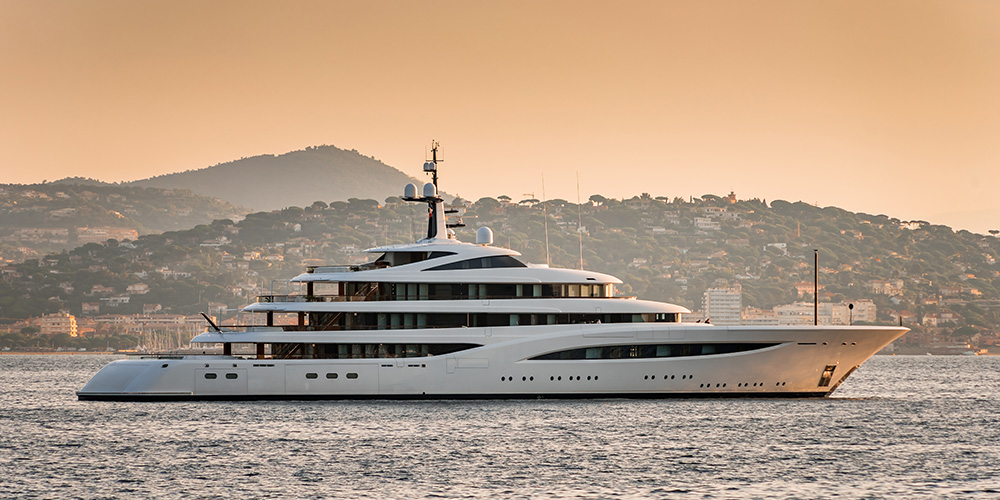
The most expensive yachts in the world are no longer just about luxury — they are private, fully customized environments built for people who want complete control over how they travel, live, and host at sea. In 2026, these yachts function more like floating estates than traditional vessels, blending military-grade security, resort-level wellness facilities, and engineering feats that rival naval warships.
What separates these yachts isn't just price. It's how they're built, what they're built for, and who they're built for. Some prioritize security, others focus on space or long-term living, and a few exist purely as symbols of wealth. This list breaks down the most expensive luxury yachts, explains the real story behind each one, and flags where the commonly repeated facts don't hold up to scrutiny.
Key Takeaways
- History Supreme is frequently cited as the most expensive yacht in the world at a reported $4.8 billion, but its existence has never been independently verified and is disputed by multiple credible industry sources — its photographs were confirmed stolen from a different yacht entirely.
- Eclipse, built by Blohm+Voss for Roman Abramovich at a cost of approximately $600 million, remains one of the most technically advanced private yachts ever built — featuring a missile detection system, a three-man submarine, and a 16-meter swimming pool that converts into a dance floor.
- Koru, Jeff Bezos's $500 million sailing yacht, is the world's largest sailing yacht at 417 feet, built by Oceanco in the Netherlands with classic three-masted schooner aesthetics and a full $75 million support vessel called Abeona.
- The most expensive yachts in the world are increasingly defined by a combination of engineering complexity, rare materials, onboard technology, and personalized design — Serene has a snow room and a full submarine; Al Said has a concert hall for a 50-piece orchestra.
- A growing trend in 2026 shows that most expensive private yachts are being built as long-term floating residences with onboard wellness centers, advanced automation, and full medical suites.
- Many of the world's most expensive yachts now include support vessels, helipads, submarines, and security systems, making them fully self-sufficient environments capable of extended global travel without returning to port.
What Is the Most Expensive Yacht in the World?
The most expensive yacht in the world in 2026 is most commonly cited as History Supreme, with a reported value of $4.8 billion. But this figure comes with a significant caveat: multiple credible investigative sources — including AutoEvolution and Admiral Marine — have found no evidence the vessel was ever built. The photographs used to promote it were confirmed to be stolen from Italian yacht manufacturer Baia Yachts, and the vessel has never been sighted at any port anywhere in the world.
If History Supreme is treated as unverified, the most expensive confirmed yachts are Eclipse and Azzam, both valued at approximately $600 million at build, with Eclipse cited at up to $1.5 billion in current market estimates. For a fully verified number supported by a U.S. government source, Dilbar was valued at $600–$735 million by the U.S. Treasury Department at the time of its 2022 sanctions-related seizure.
Why the Most Expensive Yachts in the World Cost So Much
The most expensive yachts in the world cost what they do because there is no template. Every component — from the hull geometry to the handrail material, the engine configuration to the crew quarters layout — is custom-engineered for a single owner. A build like Azzam involved over 4,000 workers and 6 million man-hours. Eclipse went through five years of design, development, and construction before a single guest stepped aboard.
Beyond the build, operating costs are extraordinary. Eclipse burns approximately one ton of diesel per day just to run its air conditioning while anchored. Azzam's annual running costs are estimated at $50 million. The cost of ownership — crew salaries, fuel, insurance, docking, maintenance, and refit — typically amounts to 8–12% of the vessel's value per year, every year, for the lifetime of the yacht. Boat International's superyacht running cost guide breaks down how these expenses compound across vessel classes.
- Fully custom builds engineered from scratch for one owner
- High-end materials including marble, steel, rare hardwoods, and precious metals
- Advanced navigation, automation, and military-grade security systems
- Large permanent crews — Eclipse alone requires 70–90 crew
- Support vessels, submarines, and helicopter infrastructure add tens of millions to total cost
Top 10 Most Expensive Yachts in the World
| Rank | Yacht | Estimated Value | Owner | Notable For |
|---|---|---|---|---|
| 1 | History Supreme | $4.8B (disputed/unverified) | Unknown | Gold & platinum build — existence disputed |
| 2 | Eclipse | $600M build / up to $1.5B estimated | Roman Abramovich | Missile detection, submarine, dance-floor pool |
| 3 | Azzam | ~$600M | UAE Royal Family (MBZ) | World's longest yacht at 590ft / 180m |
| 4 | Dilbar | $600–$735M (US Treasury) | Alisher Usmanov (seized 2022) | World's largest by gross tonnage; biggest indoor pool |
| 5 | Topaz (now A+) | ~$527M at delivery | Sheikh Mansour | 52 guests, 79 crew, 147m / 482ft |
| 6 | Dubai | ~$400M | Sheikh Mohammed bin Rashid Al Maktoum | Decade-long multi-country build saga |
| 7 | Serene | ~$330M build / ~€500M sale price | Mohammed bin Salman (MBS) | Snow room, submarine, three pools, climbing wall |
| 8 | Al Said | ~$300M+ | Sultan of Oman (Sultan Haitham) | 50-piece orchestra concert hall onboard |
| 9 | Pelorus | ~$300M | Various | Expedition-class build, 6,000nm range |
| 10 | Rising Sun | ~$200M | David Geffen | Celebrity events, designed by Jon Bannenberg |
History Supreme Yacht ($4.8 Billion) — Most Expensive Yacht in the World?
History Supreme occupies an unusual position in any list of the most expensive yachts in the world: it is simultaneously the most frequently cited number one and the most seriously disputed. If you search for the world's most expensive yacht, this name will appear on nearly every list. But the evidence for its existence is remarkably thin, and several credible sources have concluded it was never built.
The story originates with British luxury designer Stuart Hughes, who in 2011 announced he had completed a 100-foot yacht constructed using over 100,000 kilograms of gold and platinum for an anonymous Malaysian businessman. The price, he claimed, was $4.8 billion. Major media outlets covered the announcement. Hughes's representatives initially confirmed details in emails to Business Insider. Then the trail went cold.
The deeper investigation that followed was damning. AutoEvolution's investigation into History Supreme found that photographs Hughes used to promote the yacht were actually stolen from Italian manufacturer Baia Yachts, who issued a formal statement confirming the imagery had been taken from their website without permission. The vessel has never appeared on any maritime tracking database, has never been spotted at any marina or port in the world, and no independent verification of the build has ever been published. Multiple yacht industry sources — including Admiral Marine and Supercar Blondie — have called it the yachting world's biggest hoax.
We include History Supreme because it dominates keyword searches for the world's most expensive yacht and any honest account of that topic must address it. But readers should understand that unlike every other yacht on this list, its existence has not been confirmed by any credible independent source.
History & Origins of the History Supreme Yacht
Stuart Hughes built his reputation selling gold-plated and diamond-encrusted consumer electronics — iPhones, Xboxes, televisions — to ultra-wealthy buyers. History Supreme represents his claimed entry into superyacht design, though no other yacht project has been attributed to him before or since. The alleged buyer was rumored to be Robert Kuok, Malaysia's wealthiest businessman, based on hints Hughes dropped publicly — though Kuok's representatives have never confirmed this. Hughes never disclosed which shipyard supposedly carried out the build, a critical omission given that a vessel of this specification would represent years of highly visible shipyard activity.
Claimed Materials & Construction
According to Hughes's own promotional material, the vessel incorporated over 100,000 kilograms of gold and platinum across every structural element — the hull base, deck, dining area, railings, and anchor. The master suite was reportedly decorated with a meteorite stone wall feature and genuine fragments of Tyrannosaurus Rex bone. A liquor bottle set with an 18.5-carat diamond and a 68-kilogram gold aquarium were described as among the interior highlights. The sheer weight of precious metals described, if genuine, would create extreme engineering challenges, including dramatically increased draft, reduced speed, and structural stress requiring exceptional compensation — none of which has been discussed or documented in any technical publication.
Who Buys Yachts Like History Supreme (If It Exists) and Why
Even as a concept, History Supreme speaks to a specific category of ultra-wealthy buyer: one for whom the yacht is not a travel tool or a lifestyle asset but a physical store of value — a floating portfolio of rare materials. Whether real or not, the idea behind it is not unusual. The same logic underpins diamond-encrusted watches, gold-plated supercars, and other luxury items where material rarity, not function, drives the price. What makes History Supreme different — and suspect — is that no photograph of it has ever been independently verified, and no one has ever claimed to have seen it in person.
Eclipse Yacht (~$600M build / estimated up to $1.5B) — One of the Most Expensive Yachts in the World
Eclipse is the antithesis of History Supreme. It is a fully documented, independently verified, widely photographed superyacht that has been operational for over fifteen years. It was the world's largest private yacht when delivered in 2010 and remains one of the most technically advanced private vessels ever built. Where History Supreme is defined by materials, Eclipse is defined by engineering and secrecy — the kind of secrecy that serves a real purpose.
Eclipse was built for Roman Abramovich, a Russian billionaire who became internationally known as the owner of Chelsea Football Club before Western sanctions following Russia's 2022 invasion of Ukraine forced him to restructure his assets and take refuge in countries that hadn't adopted those sanctions. Since March 2022, Eclipse has been anchored at Albatros Marina in Marmaris, Turkey — burning approximately one ton of diesel per day just to run its air conditioning and protect its specially commissioned artwork and climate-sensitive systems.
History & Origins of Eclipse Yacht
Eclipse was commissioned from Blohm+Voss, the prestigious Hamburg shipyard, and took five years from initial design to delivery. Its construction was shrouded in total secrecy throughout — the project was internally codenamed "Project M 147" and workers were reportedly required to sign strict non-disclosure agreements. The exterior and interior design were both handled by Terence Disdale Design, a London-based studio regarded as one of the most accomplished in the superyacht world, responsible for more interiors among the world's top 100 superyachts than any other designer. Disdale's philosophy — "beach house, not penthouse" — was reportedly applied here, with the aim of creating spaces that felt livable and warm despite the yacht's intimidating scale.
The vessel was launched from Blohm+Voss in June 2009, underwent sea trials in Denmark, and was formally delivered to Abramovich in December 2010. In 2011, it was named Motor Yacht of the Year at the World Superyacht Awards — a validation of its engineering and design from the industry's own judges.
Materials & Construction of Eclipse Yacht
Eclipse is built around a displacement ice-class steel hull with an aluminum superstructure, spanning 162.5 meters (533 feet) with a 22-meter beam. Its nine decks give it an interior volume of 13,564 gross tons. The propulsion system is diesel-electric, driving Azipod rotating propulsion units for smooth, efficient maneuvering. The yacht reaches a top speed of 21.5 knots and has a cruising range of 6,000 nautical miles — sufficient for a transatlantic crossing without refueling.
The security systems are what made Eclipse genuinely unprecedented at the time of its build. It is equipped with a missile detection system, an anti-paparazzi laser system reportedly capable of detecting camera light sensors and blinding them before a photograph can be taken, and a three-man leisure submarine capable of submerging to 50 meters. Two helicopter pads sit on the foredeck, with a covered hangar beneath capable of housing a third helicopter. The hull is reinforced to ice-class standard. Together, these features represent a security apparatus more commonly found on naval vessels than private yachts, and they influenced every major security-focused superyacht build that followed.
Interior & Lifestyle on Eclipse Yacht
Terence Disdale was given, in his own words, "a fairly free hand" on the interior, with the mandate to make the spaces feel like a home rather than a floating hotel. The results include 18 VIP suites accommodating up to 36 guests, a primary owner's suite spanning the entire beam of the vessel, a beauty salon, a full spa and gym, a fireplace, and an elevator connecting all nine decks. The main swimming pool is 16 meters long with a blue granite floor — and can be mechanically reconfigured at the touch of a button to shift from a full-depth swimming pool to a shallow wading pool, or to a flush dance floor. A sliding glass sunroof overhead allows the space to transition from open-air to sheltered within seconds. A second, smaller pool sits elsewhere on the upper decks. The teak decks, low external bulwarks designed for unobstructed ocean views, and the generous overhead heights — more typical of a great house than a yacht — all reflect Disdale's signature approach to making scale feel intimate.
Who Buys Yachts Like Eclipse and Why
Eclipse represents the apex of a specific kind of ownership: a vessel built not just for luxury, but for total environmental control. Abramovich is a man who, by the time Eclipse was commissioned, had years of experience as a high-profile public figure navigating environments where privacy and security were genuine priorities — not vanity. The submarine, the missile detection, the anti-paparazzi systems, the 70–90 crew: these are not affectations. They reflect an owner who needed a vessel that functioned as a private, sovereign environment capable of operating anywhere in the world. Eclipse appeals to buyers for whom visibility is a liability and privacy is a necessity.
Azzam Yacht ($600 Million) — Longest Yacht in the World
Azzam — Arabic for "resolute" — earned its name honestly. When it was commissioned, the brief was not to build the world's longest yacht. It was to build a yacht that could travel as fast as possible to the owner's private island off the coast of Abu Dhabi. The fact that it ended up as both the longest and one of the fastest private yachts in the world was a byproduct of engineering ambition, not a goal in itself. Nauta Design's Mario Pedol, who handled the exterior, has noted with some pride that people routinely underestimate Azzam's length — a sign of how successfully the proportions were resolved.
The yacht was commissioned by Sheikh Khalifa bin Zayed Al Nahyan, the late President of the UAE and Emir of Abu Dhabi, who passed away in May 2022. Azzam now falls under the custodianship of his successor, Mohammed bin Zayed Al Nahyan. Its home port is Khalifa Port in Abu Dhabi.
History & Origins of Azzam Yacht
The project was managed from the outset by engineer Mubarak Saad al Ahbabi, who oversaw every phase of design, construction, and delivery. Lürssen Yachts handled the naval architecture and construction at their Bremen shipyard — Azzam remains the largest single project Lürssen has ever undertaken. The original design called for a 145-meter vessel, but as the brief evolved toward greater speed and space, the yacht grew to its current 180.65 meters. Construction involved over 4,000 workers and accumulated six million man-hours. Steel cutting began in late 2009; the keel was laid in May 2011; Azzam was launched in April 2013 and delivered in September 2013 — a remarkably fast timeline for a vessel of this size. For six years from its launch, Azzam held the title of the world's longest private motor yacht, eventually ceding it to the 184-meter REV Ocean in 2019.
Materials & Construction of Azzam Yacht
The engineering achievement of Azzam lies in the combination of its scale and its speed. At 180 meters and 13,136 gross tons, achieving 30+ knots is the equivalent of building a naval frigate the size of a football field. The propulsion system combines two gas turbines and two diesel engines driving four pump-jets, producing a combined output of up to 97,000 horsepower. The hull was designed with an unusually shallow 4.3-meter draft — extraordinary for a vessel of this length — allowing access to shallower ports and coastal waters typically off-limits to yachts of comparable size. The main salon alone measures 29 meters by 18 meters, larger than a tennis court, with no structural pillars and floor-to-ceiling custom-made windows 7 centimeters thick. At top speed, the engines burn 13 tons of fuel per hour, which is why Azzam has two distinct operating modes: a long-range economical mode and a sprint mode for the Abu Dhabi island run.
Interior & Lifestyle on Azzam Yacht
No interior photographs of Azzam have ever been officially released — the owner's privacy was absolute throughout the build and has remained so since. What is known comes from construction records and industry accounts. The interior was designed by Christophe Leoni of Creation Line Decoration, based in the UAE, in a lavish Empire style with extensive use of wood furniture and mother-of-pearl inlays. It is reported that more than a full year's production of pearls was used in the interior finish. The vessel accommodates up to 36 guests in 18 cabins and carries up to 70 crew across 30 crew cabins. Rumored amenities include a bullet-proof master suite and a state-of-the-art missile defense system — the latter unconfirmed but consistent with the security standards expected of a UAE presidential vessel.
Who Buys Yachts Like Azzam and Why
Azzam was built for a head of state with a specific practical requirement: to reach a private island quickly and comfortably. The scale, the speed, the security features — all of it flows from that original brief. Buyers at this level are not purchasing a yacht as a luxury toy. They are procuring a mobile sovereign environment capable of supporting diplomatic meetings, state-level security protocols, and the kind of hosting obligations that come with leading a major Gulf nation. Azzam is less a yacht in the traditional sense and more a maritime extension of government infrastructure.
Topaz Yacht (~$527 Million at Delivery) — Luxury Mega Yacht for Lifestyle and Travel
Topaz — now officially renamed A+ after a quiet name change in May 2019 — is one of the most secretive superyachts in the world, a record that is even harder to achieve when your yacht is 147 meters long and weighs over 12,000 gross tons. In the decade since its 2012 delivery, remarkably little verified information has emerged about its interior. What is known is that it is one of the largest and most capable private yachts afloat, operated by one of the most private royal families in the world.
History & Origins of Topaz Yacht
Topaz was built by Lürssen Yachts in Bremen, Germany — the same shipyard that built Azzam — and delivered in 2012 to Sheikh Mansour bin Zayed Al Nahyan, Deputy Prime Minister of the UAE and widely known as the owner of Manchester City Football Club. The exterior was designed by Tim Heywood Design, with the interior handled by Terence Disdale — the same designer responsible for Eclipse. When launched, Topaz was the world's fourth-largest private yacht. It took four years to build and is reported to have cost over £400 million. The curious name A+ was reportedly chosen to ensure the vessel appears near the top of international registry listings alphabetically — following the same logic used by Andrey Melnichenko's Motor Yacht A.
Topaz also attracted international scrutiny due to reported connections between its financing and the 1MDB investment fund scandal, one of the largest financial frauds in history. The precise nature of any connection has never been adjudicated, but the reports added an additional layer of intrigue to an already secretive vessel.
Materials & Construction of Topaz Yacht
Topaz is built around a steel hull and aluminum superstructure, measuring 147.25 meters in length with a beam of 21.5 meters and a gross tonnage of 11,589–12,532 tons. Twin Pielstick diesel engines rated at nearly 8,000 horsepower each give the yacht a maximum speed of over 25 knots — impressively fast for its displacement. Zero-speed stabilizers ensure a smooth platform even when stationary in open water, crucial for comfort during extended stays. The yacht spans eight decks and can accommodate up to 52 guests across 26 staterooms, served by a crew of 79 in 40 crew cabins — a guest-to-crew ratio that ensures every guest has access to more than one dedicated crew member.
Interior & Lifestyle on Topaz Yacht
The Topaz interior, by Terence Disdale's standards of creating spaces that feel like a home rather than a hotel, is believed to be fitted to the same level of quiet opulence found in Eclipse. Confirmed amenities include a gym, swimming pool, two hot tubs, a cinema, a conference room, a lift, and two helidecks. A tender garage accesses the water from the stern, accompanied by a wide range of water toys. In 2014, Hollywood actor Leonardo DiCaprio borrowed the yacht from Sheikh Mansour for the FIFA World Cup in Brazil, reportedly hosting an 80s-themed party aboard with Jamie Foxx and Orlando Bloom — one of the few glimpses the public has had of the yacht in use.
Who Buys Yachts Like Topaz and Why
Topaz is the yacht of a principal who values capability, discretion, and the ability to host at scale — from a quiet family voyage to a large formal gathering — without compromising on privacy. Sheikh Mansour has since taken delivery of an even larger Lürssen build, Blue, confirming that Topaz has been superseded in his fleet. That Topaz was reportedly gifted to Crown Prince Mohammed bin Salman — a transaction of this magnitude used as a diplomatic gift — underlines the level at which these assets operate.
Dubai Yacht (~$400 Million) — Iconic Royal Mega Yacht With an Extraordinary History
No yacht on this list has a stranger history than Dubai. It changed hands three times, traversed continents unfinished on a heavy-lift ship, nearly collapsed into legal and financial ruin, and was completed by a rotating cast of contractors in two countries before finally being delivered — ten years after it was originally ordered — to a completely different owner than the one who commissioned it. That it exists at all, and that it is as magnificent as it is, is itself a remarkable story.
History & Origins of Dubai Yacht
Dubai was originally commissioned in 1996 by Prince Jefri Bolkiah, the younger brother of the Sultan of Brunei and one of the world's wealthiest men at the time. Construction began as a joint project between Blohm+Voss and Lürssen in Hamburg, Germany. In 1998, with only the bare steel hull and part of the aluminum superstructure complete, Prince Jefri terminated the contract — reportedly due to cost overruns that exceeded the agreed limits set by the Brunei royal family. The partially built vessel sat in a covered floating dock at Blohm+Voss while liquidators searched for a buyer.
In 2001, the Dubai government acquired the hull, the floating dock it sat in, and 250 containers of spare parts and pre-fitted components. The unfinished carcass was transported — on the heavy-lift ship MV Blue Marlin — from Hamburg to Turkey, where initial completion work was attempted. That effort also stalled. Eventually, Platinum Yachts, a subsidiary of Dubai World, took over. Kostis Antonopoulos led the project, assembling a team of nearly 800 workers plus hundreds of subcontractors. The brief he received from Sheikh Mohammed bin Rashid Al Maktoum was simple and revealing: he wanted "a floating Burj Al Arab." That ambition shaped everything that followed. Boat International's full account of the Dubai build is one of the most detailed records of how close the project came to never being completed. The yacht was finally delivered in 2006 — a decade after its original commission — and named Dubai.
Materials & Construction of Dubai Yacht
Dubai measures 162 meters (531 feet) in length with a 22.4-meter beam and 12,488 gross tons — large enough to have held the title of world's longest yacht from 2006 until Eclipse was delivered in 2010. The exterior design by Andrew Winch gives the vessel clean, restrained lines that belie the extraordinary interior. The hull is finished in over 10,000 square meters of Awlgrip Snow White paint with stainless steel detailing around portholes and large windows. The yacht accommodates 48 guests across 24 plush cabins and carries a crew of 88. One of its most striking structural features is a 21.3-meter-wide open atrium — one of the largest ever included on a private yacht — that floods the interior with natural light and connects the decks visually.
Interior & Lifestyle on Dubai Yacht
The Dubai interior is exactly what Antonopoulos promised: an assault on the senses in the most deliberate, opulent way possible. Bold colors dominate throughout, offset by intricately handcrafted mosaics and a signature circular glass staircase whose steps change color as natural light moves across them from the top deck. A 10-meter swimming pool features handmade tiling lit by embedded optical fibers. The vessel also has a cinema, a disco, a barbecue area, a gym, and a Blackhawk helicopter landing platform. Below deck, a submarine garage houses a personal submarine alongside a wide array of water toys. The dining room seats 90 guests — a number that reflects the yacht's primary function as a floating venue for state-level hospitality. Dubai is reportedly used frequently by the Al Maktoum family for day trips near Dubai and is moored in front of the ruler's private island when not in use.
Who Buys Yachts Like Dubai and Why
Dubai represents an ownership model where the yacht is as much a statement of civic identity as personal wealth. Sheikh Mohammed's desire for a floating Burj Al Arab was not just an aesthetic preference — it was a declaration of what Dubai, as a city and a concept, stands for. The yacht's turbulent ten-year construction saga, its multiple jurisdictions, its survival against financial and legal odds, and its eventual completion as one of the world's great superyachts mirrors in some ways the story of Dubai itself. Buyers at this level are making a statement about what they build, not just what they own.
Serene Yacht (~$330 Million Build / ~€500 Million Sale) — Wellness-Focused Luxury Yacht
Serene is the only yacht on this list that Bill Gates rented for a summer vacation — at a reported cost of $5 million per week. It is also one of the few yachts on this list that ran aground, sustaining significant bow damage on a shallow reef in the Red Sea in August 2017. These two facts tell you more about Serene than any specification sheet: it is a yacht that is actually used, extensively and adventurously, by people who want to experience the world from the water — not simply to own something valuable.
History & Origins of Serene Yacht
Serene was built by Fincantieri, the massive Italian commercial and naval shipbuilder, at their Muggiano facility — making it Fincantieri's first-ever private superyacht. The yacht was commissioned by Yuri Shefler, the Russian billionaire who built his fortune on the Stolichnaya vodka brand, and was delivered in August 2011 at a build cost of $330 million. The Fincantieri team, unaccustomed to private superyacht construction, brought in an extraordinary level of engineering rigor — including three months of finite element method (FEM) structural analysis to engineer around the yacht's 11 hull openings. Serene became the largest yacht ever built in Italy and won the World Superyacht Award for Best Displacement Motor Yacht over 85 meters in 2012.
In the summer of 2014, while vacationing in the south of France, Crown Prince Mohammed bin Salman of Saudi Arabia encountered the yacht and bought it on the spot from Shefler — reportedly for approximately €500 million, more than 50% above the original build cost. Dutch court documents later confirmed Shefler's purchase price was €220 million, meaning he made a profit of approximately €230 million (over $250 million) on the transaction.
Materials & Construction of Serene Yacht
Serene is 133.9 meters (439 feet) long with an 18.5-meter beam and 8,231 gross tons, spread across seven decks with over 4,000 square meters of interior space. The exterior lines were designed by Espen Øino International, one of the world's most respected superyacht architects. Propulsion comes from eight MTU diesel-electric engines driving the vessel to a top speed of 25 knots with a 6,000 nautical mile range. The engineering challenge of building Serene included 11 hull penetrations — unusual for a vessel of this size — requiring extensive structural engineering to ensure integrity at sea. Two helipads are included, one of which can be mechanically converted into either a pool or a dance floor. The yacht also carries a full-sized personal submarine — a GSE Trieste VAS 525/60 — and an Eurocopter EC-145 helicopter.
Interior & Lifestyle on Serene Yacht
The interior, by Reymond Langton Design, was conceived as a home at sea rather than a hotel: warm, personal, and sensory without being ostentatious. A grand spiral staircase rises through six decks, bathed in natural light from a skylight at the top, with glass segments at each landing ensuring light permeates throughout. Three swimming pools are distributed across the yacht, including a 15-meter main pool at the beach club level whose stern door opens to transform the pool into an inboard dock for tenders — one of the most technically complex features ever executed on a private yacht. The wellness facilities go far beyond what most superyachts offer: there is a full spa, a steam room, a sauna, a hammam, a snow room — a cold-therapy chamber cooled to sub-zero temperatures — an indoor climbing wall, a between-decks water slide, and a Nemo underwater viewing room. A boardroom, piano bar, outdoor cinema, children's playrooms, and a dedicated Balinese-inspired sea cabin round out the interior offering.
Who Buys Yachts Like Serene and Why
MBS's impulsive purchase of Serene during a summer vacation is actually revealing about how these transactions work at the very top of the market. When you have the resources and the inclination, and the right vessel presents itself, the decision is made quickly and personally. The wellness infrastructure of Serene — the snow room, the submarine, the multiple pools, the spa — aligns with a broader pattern in ultra-luxury superyacht design: the move toward comprehensive physical wellbeing as a core feature, not an add-on. Serene treats the body as well as it does the eye.
Al Said Yacht (~$300 Million) — Cultural and Royal Luxury Yacht
Al Said is, by most measures, the most unusual yacht on this list — not because of what it costs, or how long it is, but because of what is inside it. While other yachts in this tier compete on pool configurations, security systems, and guest capacity, Al Said's defining feature is a dedicated concert hall designed to accommodate a full 50-piece orchestra. No other private yacht in the world has one. That single detail tells you everything about the owner who commissioned it and what he valued in a vessel designed to be his home at sea.
History & Origins of Al Said Yacht
Al Said was commissioned by Sultan Qaboos bin Said al Said of Oman in 2006 and built by Lürssen under the codename Project Sunflower. Launched in September 2007 and delivered in 2008, it replaced an earlier, smaller royal yacht of the same name. Sultan Qaboos, who ruled Oman from 1970 until his death in January 2020, was renowned for his appreciation of classical music — he established Oman's Royal Symphony Orchestra, built the Royal Opera House Muscat, and reportedly played both the organ and the lute personally. The concert hall aboard Al Said was not a novelty: it was a genuine working performance venue, acoustic engineering and all, allowing the Sultan to host and enjoy live orchestral performances while at sea. Following Qaboos's death, Al Said passed into the custody of his successor, Sultan Haitham bin Tariq Al Said, and continues to serve as Oman's primary royal yacht.
Materials & Construction of Al Said Yacht
At 155 meters (508 feet) and 15,850 gross tons, Al Said is actually larger by volume than Azzam — the vessel often described as the world's largest yacht. While Azzam is longer, Al Said's gross tonnage of 15,850 GT places it second only to Dilbar among all private superyachts by interior volume. The exterior was designed by Espen Øino International — the same studio responsible for Serene — with a sand-colored profile that reads as deliberately low-key for a vessel of its scale. The interior design is attributed to Redman Whiteley Dixon, featuring classically paneled wood walls and large formal reception spaces. Al Said accommodates up to 70 guests across 26 cabins and carries a crew of approximately 154–174 people — a crew-to-guest ratio that ensures maximum personal service. Twin MTU engines of nearly 11,000 horsepower each push the yacht to a maximum speed of 22 knots, with a maximum range of 7,700 nautical miles — far enough to circumnavigate most of the globe without refueling.
Interior & Lifestyle on Al Said Yacht
The concert hall is the interior's defining space. Engineered with dedicated acoustics, classically paneled walls, and seating for a 50-piece orchestra, it gives Al Said a purpose that no other private yacht shares: it is a cultural venue as much as a private residence. The wider interior includes formal reception areas, a theater, conference rooms, a deck jacuzzi, a swimming pool, an elevator, and an aft helipad. A full medical suite — including an operating theater and dental facility — ensures the yacht is genuinely self-sufficient for extended voyages. Al Said is typically moored at Sultan Qaboos Port near Muscat and is accompanied by Omani naval assets when at sea, reflecting its status as a vessel of state.
Who Buys Yachts Like Al Said and Why
Sultan Qaboos built Al Said as an expression of personal and national identity — not just his love of music, but his vision of Oman as a modern, culturally sophisticated state. A yacht with a concert hall is not a luxury indulgence; it is a diplomatic and artistic statement. The buyer of a vessel like Al Said is someone for whom the yacht must serve multiple functions simultaneously: private residence, diplomatic venue, cultural platform, and sovereign space. The concert hall is the most vivid example of how these vessels are built around the specific personality and priorities of a single owner, not around market expectations.
Pelorus Yacht (~$300 Million) — Exploration Mega Yacht
Pelorus occupies a distinct niche among the most expensive yachts in the world: it was built not for grand state receptions or large-scale celebrity hosting, but for serious, long-range exploration. At 115 meters (377 feet), it is smaller than several other yachts on this list, but its 6,000 nautical mile range, expedition-class construction, and combination of luxury and functionality make it a benchmark in a different category of superyacht ownership entirely.
History & Origins of Pelorus Yacht
Pelorus was built by Lürssen and delivered in 2003. Its exterior design was handled by Tim Heywood — who also designed the exterior of Topaz — while the interior was created by Terence Disdale, completing a creative pairing responsible for some of the most distinctive superyachts of the early 2000s. Pelorus has had multiple owners over its operational life, most notably Roman Abramovich prior to his commissioning of Eclipse, and tech billionaire James Simons among others. It is currently registered in the Cayman Islands. The vessel was designed from the outset for global cruising, with the emphasis on reaching destinations — including remote coasts, polar regions, and shallow anchorages — that more massive vessels simply cannot access.
Materials & Construction of Pelorus Yacht
Pelorus is built around a steel hull and aluminum superstructure, measuring 115 meters in length with a 17.2-meter beam and 5,403 gross tons. Twin Wärtsilä engines of 5,300 horsepower each give the vessel a maximum speed of 20 knots and a comfortable cruising speed of 18 knots. The 6,000 nautical mile range — without refueling — is the key specification that defines Pelorus's character. It can transit the North Atlantic, cruise the Pacific, or operate in remote polar waters without the logistical dependency on major port infrastructure that limits larger, more fuel-hungry vessels. The vessel accommodates 24 guests across 12 cabins and carries a crew of 42 — a ratio that ensures a genuinely personal experience without the institutional feel of larger flag-of-state yachts.
Interior & Lifestyle on Pelorus Yacht
Terence Disdale's interior for Pelorus reflects the same "beach house, not penthouse" philosophy applied to Eclipse, but calibrated for a vessel used on genuine expeditions. The emphasis is on comfort during long ocean passages, with materials and proportions that feel grounded rather than grand. Dedicated diving equipment and expedition support gear are integrated into the vessel's tender garage and beach club. The combination of luxury guest accommodation with genuine long-range capability and expedition infrastructure makes Pelorus a genuinely different kind of expensive yacht — one where the cost is justified by what it can do rather than how large it is.
Who Buys Yachts Like Pelorus and Why
Pelorus appeals to a buyer who defines luxury through experience rather than scale. Its multiple ownership changes reflect the fact that it is a genuinely functional vessel — one that gets used — rather than a floating asset parked at a prestigious marina. The buyer of a vessel like Pelorus is someone who wants to go somewhere, and somewhere specific: the Faroe Islands, the Galápagos, Antarctica, the Northwest Passage. The expense is in building something capable of getting there and back in comfort, not in building something larger than everything else in the harbor.
Dilbar Yacht ($600–735 Million) — World Record Indoor Pool and Seized by Germany
Dilbar holds two records: it contains the largest indoor swimming pool ever installed on a private superyacht, and it became one of the highest-profile asset seizures of the Russia-Ukraine sanctions era when German federal authorities impounded it in April 2022. At 156 meters and 15,917 gross tons — the highest gross tonnage of any private motor yacht in the world — Dilbar was designed above all else for space and comfort, built as a floating residence for extended periods at sea rather than a vessel primarily optimized for speed or prestige display.
Important note: Dilbar was seized by Germany's Federal Criminal Police Office (BKA) in April 2022 following the sanctioning of its linked owner, Uzbek-Russian billionaire Alisher Usmanov, in connection with Russia's invasion of Ukraine. Its ownership was found to have been transferred to Usmanov's sister, Gulbahor Ismailova, who was also subsequently sanctioned. The yacht remains in legal dispute as of 2026, with the German government spending approximately $70,000 per day to maintain it in port at Bremen. Its original purchase price was significantly underreported in many media accounts at $256 million — the U.S. Treasury formally valued Dilbar at $600–$735 million at the time of sanctioning.
History & Origins of Dilbar Yacht
Dilbar was built by Lürssen and delivered in 2016, named after Usmanov's mother. It was designed to replace a smaller earlier yacht of the same name (subsequently renamed Al Raya in 2018). The interior was created by Andrew Winch Design, the same London firm responsible for Dubai's exterior styling, while the exterior was designed by Espen Øino. The project was codenamed Project Omar during construction. At 15,917 GT, Dilbar surpassed all previous private motor yachts in interior volume — even though at 156 meters it is shorter than Azzam — reflecting an extraordinary beam of 24 meters and an interior design philosophy that prioritized habitable space over length.
Materials & Construction of Dilbar Yacht
The vessel is built around a steel hull and aluminum superstructure, spanning 156 meters (511 feet) with the aforementioned 24-meter beam and a draft of 6.1 meters. The interior volume of 15,917 gross tons is the highest of any private motor yacht in the world, beaten only by state vessels like Fulk Al Salamah. Dilbar accommodates 24 guests in 12 suites — each with fold-out balconies that open directly to the sea — served by 84 full-time crew in 42 crew cabins. Two helipads sit fore and aft. The swimming pool, at 180 cubic meters of capacity, is the largest indoor swimming pool ever installed on a yacht — and at approximately 25 meters long (roughly 82 feet), it qualifies as a competition-length indoor pool. A private garden with a specifically developed salt-tolerant grass variety sits on one of the decks. Over 1,000 custom-made sofa cushions were commissioned for the interior. These are not incidental details — they are a deliberate statement about what long-term living at sea requires in terms of comfort at scale.
Interior & Lifestyle on Dilbar Yacht
Andrew Winch's interior for Dilbar reflects the same ethos he brought to Dubai: richly detailed, deeply personal, and designed to feel like a permanent home rather than a temporary residence. The guest suites are full apartments in their own right, each with direct balcony access to the sea through fold-out panels that expand the living space. The wellness facilities include a full gym, sauna, and beauty salon. A private garden — with real grass engineered to tolerate salt air — provides a slice of terrestrial life aboard a vessel permanently at sea. The sheer scale of Dilbar's interior, distributed across 3,800 square meters, allows rooms to breathe in a way that smaller superyachts — even very expensive ones — simply cannot. It is the closest thing to a private house afloat that exists in the superyacht world.
Who Buys Yachts Like Dilbar and Why
Dilbar was built by someone who intended to live on it. Not visit occasionally. Not charter occasionally. Live on it, for extended periods, in the kind of comfort and privacy that a permanent private residence provides. The fold-out balconies, the garden, the scale of the interior, the 1,000 custom cushions — these are the choices of someone designing a home, not a vehicle. The sanctions saga that followed Usmanov's 2022 sanctioning is a reminder that assets of this scale, however private they may feel, operate in a world where geopolitical events can overtake personal arrangements at speed.
Rising Sun Yacht (~$200 Million) — Celebrity-Owned Luxury Yacht
Rising Sun is, in many ways, the most publicly visible yacht on this list. Where Azzam has never been photographed inside, where Al Said's interior has never been released, and where Dilbar sits impounded in a German port, Rising Sun has spent its life in some of the most glamorous anchorages in the world, hosting some of the most recognizable names in entertainment, technology, and sport. It is the yacht that has been most often spotted, most often photographed, and most often discussed in the context of the lifestyle it enables — rather than the engineering it represents.
History & Origins of Rising Sun Yacht
Rising Sun was built by Lürssen and designed by the legendary Jon Bannenberg, who is widely considered the father of modern superyacht design — the man who established the discipline as a serious creative practice in the 1970s and 1980s. It was originally commissioned by Larry Ellison, the co-founder of Oracle, and delivered in 2004. In 2010, Ellison sold Rising Sun to entertainment mogul David Geffen, founder of Geffen Records and DreamWorks, for a reported $590 million — though Ellison reportedly holds a minority ownership stake. Geffen is one of the most celebrated yacht hosts in the world; his guest lists over the years have included Barack Obama, Oprah Winfrey, and a significant percentage of Hollywood's A-list.
Materials & Construction of Rising Sun Yacht
Rising Sun measures 138 meters (454 feet) in length with a gross tonnage of approximately 5,952 tons and accommodates up to 16 guests across eight staterooms, served by a crew of 45. The vessel reaches a top speed of around 18 knots and has a range sufficient for extended Atlantic and Pacific passages. Jon Bannenberg's exterior design gives Rising Sun a distinctive profile — long, low, and purposeful — that reflects his view that superyachts should look like they belong on the water rather than imported from another context. The interior, also by Bannenberg, incorporates the warm, eclectic material palette and considered spatial planning that characterized his most celebrated work. Rising Sun was Bannenberg's last major yacht project before his death in 2002; it was completed posthumously by his studio.
Interior & Lifestyle on Rising Sun Yacht
The interior of Rising Sun reflects Geffen's background in entertainment: it functions as a platform for social experience at the highest possible level. A cinema, gymnasium, multiple relaxation decks, and a layout optimized for large-group hosting support the yacht's primary use as a venue. The spacious aft deck is one of the yacht's most distinctive features — an open-air social space large enough to accommodate dozens of guests for informal gatherings. The beach club and water toy storage provide the recreational infrastructure for the active, social Mediterranean and Caribbean itineraries for which Rising Sun is most frequently chartered.
Who Buys Yachts Like Rising Sun and Why
Rising Sun exists at the intersection of wealth, culture, and social capital. For David Geffen, the yacht is not primarily a residence or an engineering statement — it is the world's finest private venue. A gathering on Rising Sun carries a particular social cachet that a gathering at a house, however grand, does not. The guest lists over the years have included people who could easily afford to host their own events at equivalent scale; they accept Geffen's invitation because Rising Sun itself confers something. That intangible quality — the yacht as social currency — is what defines this category of ownership.
How the Most Expensive Yachts Compare
While all of the yachts on this list rank among the most expensive yachts in the world, they excel in very different areas and were built for very different purposes:
- Most Expensive Claimed (Disputed): History Supreme ($4.8B — existence unverified)
- Most Expensive Verified by Government Source: Dilbar ($600–735M, per U.S. Treasury)
- Most Secure Yacht: Eclipse (missile detection, submarine, anti-paparazzi system)
- Longest Yacht in the World: Azzam (590ft / 180m)
- Largest Yacht by Interior Volume: Dilbar (15,917 GT)
- World's Largest Sailing Yacht: Koru (Jeff Bezos, 417ft, $500M)
- Most Unique Interior Feature: Al Said (full 50-piece orchestra concert hall)
- Most Wellness Features: Serene (snow room, submarine, climbing wall, three pools)
- Best for Exploration: Pelorus (6,000nm range, expedition-class build)
- Most Social / Celebrity Yacht: Rising Sun (Jon Bannenberg design, hosted by David Geffen)
- Most Complex Build History: Dubai (10 years, three owners, two countries)
This comparison highlights a defining shift in the modern superyacht market: the most expensive luxury yachts are no longer competing purely on price or size. They compete on specialization, purpose, and how well they serve a single owner's specific vision of life at sea.
Frequently Asked Questions
What is the most expensive yacht in the world in 2026?
The most expensive yacht in the world in 2026 is most commonly cited as History Supreme at a reported $4.8 billion, but this claim is widely disputed and has never been independently verified — the vessel has never been sighted and its promotional photos were proven stolen from another manufacturer. Among fully verified yachts, Eclipse was built for approximately $600 million and is valued at up to $1.5 billion in current market estimates. Dilbar was formally valued at $600–$735 million by the U.S. Treasury at the time of its 2022 sanctions seizure.
Who owns the most expensive yachts in the world?
The most expensive yachts in the world are owned by a mix of Russian oligarchs (Eclipse — Abramovich; Dilbar — Usmanov, now in legal dispute), Gulf royal families (Azzam — UAE; Topaz/A+ — Sheikh Mansour; Al Said — Sultan of Oman; Dubai — Sheikh Mohammed of Dubai), and tech billionaires (Koru — Jeff Bezos) and entertainment moguls (Rising Sun — David Geffen). Most ownership is held through corporate trust structures registered in offshore jurisdictions for privacy and asset protection.
How much does the most expensive yacht cost?
Among verified builds, the most expensive yachts in the world cost between $200 million and $735 million to build. Eclipse cost approximately €350 million (~$600M) in 2010. Azzam cost approximately $600 million in 2013. Dilbar was built for approximately $600 million in 2016. Jeff Bezos's Koru cost $500 million in 2023. If History Supreme is taken at face value, the number rises to a disputed $4.8 billion.
What is the difference between a superyacht and a mega yacht?
A superyacht is generally defined as any luxury yacht over 24 meters. A mega yacht — sometimes called a gigayacht — refers to vessels typically exceeding 80–100 meters. Boat International's definition guide covers how the industry categorizes these vessels. Most of the most expensive yachts in the world fall squarely into the mega yacht category, with several exceeding 150 meters and challenging the boundaries of what is architecturally possible in a privately owned vessel.
How much does it cost to maintain a yacht like this?
Maintaining one of the most expensive yachts in the world typically costs 8–12% of the vessel's value per year. Eclipse costs approximately $50–60 million annually. Azzam's annual running costs are estimated at $50 million. Eclipse alone burned one ton of diesel per day just to run its air conditioning while anchored in Turkey. When Dilbar was seized by Germany, it cost the German government approximately $70,000 per day to maintain the vessel in port.
What features do the most expensive yachts usually include?
The most expensive private yachts typically include helipads, multiple swimming pools, cinemas, spas, submarines, and dedicated support vessels. More unusual features among this group include a 50-piece concert hall (Al Said), a snow room and indoor climbing wall (Serene), a swimming pool that converts to a dance floor (Eclipse), a satellite-controlled 29-by-18-meter pillarless main salon (Azzam), and a real-grass garden engineered for salt air (Dilbar). In 2026, wellness infrastructure, long-range expedition capability, and onboard medical facilities are increasingly standard at this level.
Who owns the most expensive yacht in the world?
If History Supreme is taken as real, ownership is attributed to an anonymous Malaysian businessman, rumored but unconfirmed to be Robert Kuok. Among fully verified yachts, Dilbar is the most expensive as confirmed by a government source — it was linked to Alisher Usmanov but is currently in legal dispute following German seizure in 2022. Eclipse, the next most valuable verified vessel, is owned by Roman Abramovich, though it changed nominal ownership in late 2022 amid Western sanctions.
Summary
The most expensive yachts in the world are no longer defined by size or price alone. Each vessel on this list represents a different philosophy of what it means to be at sea: Eclipse is security and sovereignty; Azzam is engineering at the edge of what is possible; Al Said is cultural identity and personal passion; Serene is the body and the senses; Dilbar is the home; Rising Sun is the party; Pelorus is the journey itself.
What also becomes clear across this list is that provenance matters. The vessels with the most compelling stories — Dubai's decade-long multi-country construction saga, Serene's impulsive acquisition on a French Riviera vacation, Eclipse's migration to Turkish waters ahead of sanctions — are the ones that illuminate something real about the world these assets operate in. These are not just yachts. They are records of decisions made by some of the most powerful people of their era, at moments that shaped their lives and, in some cases, the news cycles of entire nations.
As the industry continues to develop, the next generation of most expensive private yachts is likely to push further into sustainable propulsion, autonomous systems, and designs that blur the line between a vessel and a permanent floating residence — making the category more complex, more expensive, and more revealing than ever.