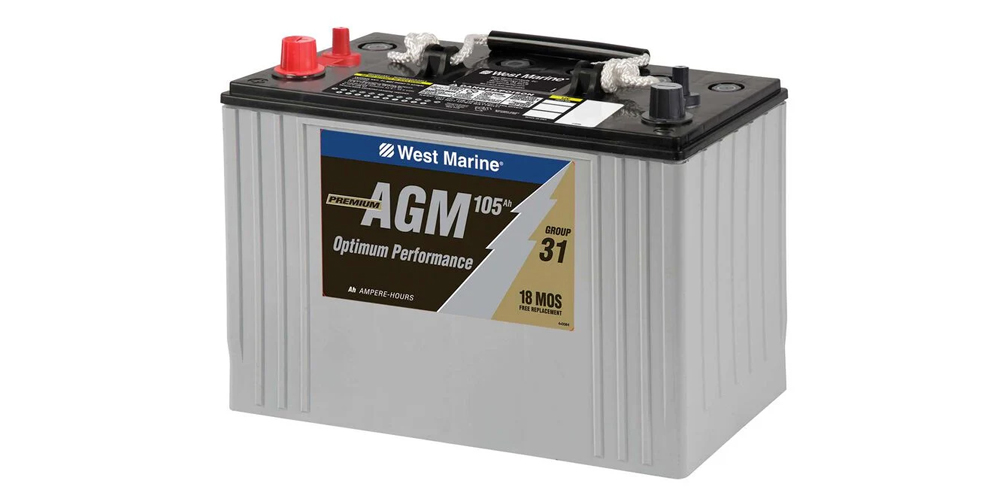
Why AGM Battery Maintenance Matters
AGM (Absorbed Glass Mat) batteries have become one of the most popular battery technologies in boating because they are sealed, vibration resistant, maintenance-free, and capable of supporting both starting and deep-cycle applications. While AGM batteries typically cost more than traditional flooded lead-acid batteries, their longer service life and superior performance make them a worthwhile investment for many boaters.
The reality is that most AGM batteries fail long before reaching their expected lifespan—not because of manufacturing defects, but because of improper charging, chronic undercharging, excessive discharge cycles, heat exposure, or poor storage practices. Understanding how AGM batteries work and how they degrade can help you get years of additional service while avoiding costly replacements.
- Understanding AGM Batteries
- What Shortens AGM Battery Life?
- Best Practices for Extending AGM Battery Life
- Understanding AGM Battery State of Charge
- Charging AGM Batteries Correctly
- Seasonal Storage and Winter Layup
- How Temperature Affects AGM Batteries
- Signs Your AGM Battery Needs Replacement
- Conclusion
- AGM Battery FAQs
- We're Here to Help
Understanding AGM Batteries
AGM batteries are a type of sealed lead-acid battery that uses fiberglass mats to absorb and hold electrolyte between the battery plates. Unlike flooded batteries, there is no free liquid acid inside the battery. This design makes AGM batteries spill-resistant, highly vibration resistant, and capable of delivering high current for engine starting while also supporting deep-cycle loads.
AGM Battery Glossary
AGM (Absorbed Glass Mat): A sealed lead-acid battery that suspends electrolyte within fiberglass separators.
Deep Cycle: A battery designed to repeatedly discharge and recharge without significant damage.
State of Charge (SOC): The amount of energy remaining in the battery expressed as a percentage.
Sulfation: Lead sulfate crystal buildup that permanently reduces battery capacity.
Float Charging: A maintenance charging mode designed to keep batteries fully charged during storage.
Compared to flooded batteries, AGM batteries charge faster, require no watering, tolerate vibration better, and experience less self-discharge during storage. However, they are more sensitive to charging voltage and improper charging practices.
What Shortens AGM Battery Life?
Most AGM battery failures are preventable. Understanding the most common causes of battery damage is the first step toward maximizing lifespan.
Chronic Undercharging
The leading cause of AGM battery failure is undercharging. A battery that never reaches full charge gradually develops sulfation, reducing capacity and increasing internal resistance. Many boats spend weeks or months partially charged, slowly damaging the battery even when not in use.
Deep Discharge Cycles
Although AGM batteries tolerate deeper discharge than starting batteries, repeatedly draining them below 50% state of charge dramatically reduces cycle life. The deeper the discharge, the fewer cycles the battery can provide.
Overcharging
Excessive charging voltage creates heat inside the battery and can dry out the fiberglass mats over time. Because AGM batteries are sealed, this damage is irreversible.
Heat Exposure
Heat is the enemy of all battery technologies. Elevated temperatures accelerate internal corrosion and shorten service life. A battery operating at 95°F can lose years of lifespan compared to one operating at moderate temperatures.
Improper Storage
Allowing a battery to sit discharged through the off-season encourages sulfation and can permanently reduce available capacity before the next boating season begins.
Best Practices for Extending AGM Battery Life
1. Keep Batteries Fully Charged
AGM batteries perform best when maintained near full charge. Recharge batteries promptly after every outing and avoid leaving them partially discharged for extended periods.
2. Avoid Discharging Below 50%
While occasional deep discharges are acceptable, regularly draining below 50% significantly reduces battery cycle life. Installing a battery monitor can help you track state of charge accurately.
3. Use the Correct Charger
Always use a charger that includes a dedicated AGM charging profile. AGM batteries require specific charging voltages that differ from flooded and lithium battery technologies.
4. Monitor Battery Health
Regularly inspect battery terminals, cables, and connections. Poor electrical connections create resistance, heat, voltage drop, and charging inefficiencies.
5. Maintain Clean Connections
Corrosion at terminals reduces charging efficiency and starting performance. Clean terminals periodically and protect them using corrosion inhibitors designed for marine applications.
6. Verify Charging System Performance
Your alternator, shore charger, solar controller, and inverter charger must all be configured correctly for AGM charging requirements. Even a premium battery can fail prematurely if the charging system is improperly adjusted.
Understanding AGM Battery State of Charge
Voltage measurements provide a useful estimate of battery charge when the battery has rested without load or charging activity.
| State of Charge | Voltage (12V AGM) |
|---|---|
| 100% | 12.8V - 13.0V |
| 75% | 12.6V |
| 50% | 12.3V |
| 25% | 12.0V |
| 0% | 11.8V or lower |
Voltage alone is not a perfect measurement under load, which is why serious cruisers and anglers often install dedicated battery monitoring systems.
Charging AGM Batteries Correctly
Bulk Stage
During bulk charging, the charger delivers maximum current until the battery reaches the programmed charging voltage.
Absorption Stage
The charger maintains a constant voltage while current gradually tapers as the battery approaches full charge.
Float Stage
Once fully charged, voltage is reduced to a maintenance level that keeps the battery topped off without causing damage.
Most AGM manufacturers recommend bulk charging between 14.4V and 14.8V and float charging between 13.2V and 13.8V. Always follow manufacturer specifications.
Why Smart Chargers Matter
Modern multi-stage chargers automatically adjust charging output based on battery condition, improving charging efficiency while reducing the risk of overcharging.
Seasonal Storage and Winter Layup
Long periods of inactivity can be just as damaging as heavy use if batteries are stored improperly.
- Fully charge batteries before storage.
- Disconnect unnecessary loads.
- Store in a cool, dry location.
- Recharge every 3 to 6 months if not connected to a maintenance charger.
- Inspect terminals before spring commissioning.
- Verify charger settings before reconnecting shore power.
Proper winter storage can significantly extend battery lifespan and improve reliability when boating season returns.
How Temperature Affects AGM Batteries
High Temperatures
Heat accelerates internal plate corrosion and electrolyte degradation. Battery life can be reduced by nearly half for every 15°F increase above normal operating temperatures.
Cold Temperatures
Cold weather reduces available battery capacity and cranking performance. A battery that starts an engine easily in summer may struggle during winter if not fully charged.
Temperature Compensation
High-quality chargers use temperature sensors to adjust charging voltage automatically. This helps prevent overcharging in hot weather and undercharging in cold conditions.
Signs Your AGM Battery Needs Replacement
- Noticeably reduced runtime.
- Slower engine cranking.
- Battery struggles to reach full charge.
- Rapid voltage drop under load.
- Swollen or distorted battery case.
- Excessive heat during charging.
- Repeated low-voltage alarms.
Most AGM batteries provide between 4 and 7 years of service, although properly maintained batteries frequently exceed that range.
Conclusion
Extending AGM battery life comes down to proper charging, avoiding excessive discharge, minimizing heat exposure, and storing batteries correctly during periods of inactivity. By understanding how AGM batteries operate and following manufacturer-recommended charging practices, boaters can maximize reliability, reduce replacement costs, and avoid unexpected battery failures on the water.
AGM Battery FAQs
How long do AGM batteries typically last?
Most AGM batteries last between 4 and 7 years, although batteries maintained with proper charging and storage practices often exceed this range.
Can an AGM battery be left on a charger continuously?
Yes, if the charger includes an AGM-compatible float mode designed for long-term maintenance charging.
What is sulfation?
Sulfation occurs when lead sulfate crystals harden on battery plates, reducing available capacity and limiting charging performance.
Can AGM batteries freeze?
A fully charged AGM battery has excellent freeze resistance. A discharged battery is significantly more vulnerable to freezing damage.
Should I disconnect my battery during storage?
Disconnecting unnecessary loads helps prevent parasitic drain and improves long-term battery health during storage.
Are AGM batteries better than flooded batteries for boats?
AGM batteries offer improved vibration resistance, faster charging, lower maintenance requirements, and reduced self-discharge compared to flooded batteries.
We're Here to Help
Whether you're upgrading your charging system, replacing batteries, installing battery monitors, or preparing for long-distance cruising, West Marine offers the products and expertise needed to keep your electrical system operating reliably. Use our store finder to locate your nearest West Marine store.