Lifelines form a safety perimeter around your boat and should be inspected on an annual basis. Preventive maintenance is not just a prudent boating practice, but in the case of lifeline systems it could be a lifesaver.
Lifelines protect crew as they move around the deck, brace against heel, work near the bow or cockpit and recover from unexpected motion in rough conditions. Because they are exposed to salt, UV, deck loads, flexing, chafe and corrosion, lifelines can weaken over time even when they still look serviceable. A careful annual inspection helps identify problems before they become a man-overboard risk.
- Lifeline Inspection Tips
- What kind of lifeline is right for your boat?
- What size wire should you use?
- Sizing Lifeline Wire
- Replacing Your Lifelines
- Lifeline Replacement FAQs
- We're Here to Help!
Lifeline Inspection Tips
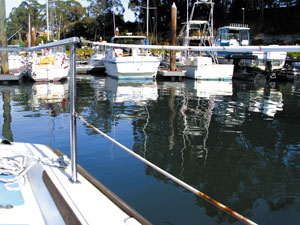
Lifelines with this much rust on the outer jacket of the vinyl-coated wire are a man-overboard accident waiting to happen.
- Tape all opening fittings (pelican hooks) so that they cannot open accidentally. Some hooks can accept a cotter pin to keep the bill from opening up.
- Make sure that adjustable fittings are secured by their lock nuts. If secured with split rings, make sure the rings are intact and taped off with rigging tape.
- Inspect all swages to make sure there is no fatigue, cracking or corrosion damage at the wire.
- Check stanchion bases for cracks, damage and movement.
- Ensure that there is good alignment between the wire and the load, and use a toggle jaw or other universal fitting to correct misalignment.
- Lifelines can only be as strong as their weakest link, which could be the stanchions’ attachments to the hull (bedded and thru-bolted), loose lifeline terminals, or the small diameter stainless wire, which often is used as an attachment to the pulpit or pushpit.
Proper maintenance and strong stanchions are necessary precautions to make sure the system withstands the impact of a falling crewmember in a worst-case scenario.
Pay special attention to any place where the wire disappears into a swage, terminal, sleeve or vinyl coating. Rust staining, swelling, cracked coating, broken strands or unexplained looseness are warning signs. Vinyl-coated lifelines deserve extra scrutiny because corrosion can develop beneath the coating before it becomes visible.
What kind of lifeline is right for your boat?
Vinyl-coated 7 x 7 stainless wire: low stretch, semi-flexible, and attractive. For years, 3/16" diameter white vinyl coated wire (5/16" OD) has been the norm. It has a traditional look and a smooth feel when you lean against or grab it. Although vinyl coated wire has been the standard for many years, vinyl coating can discolor, particularly in high UV areas, and because of the coating the wire underneath is difficult to inspect.

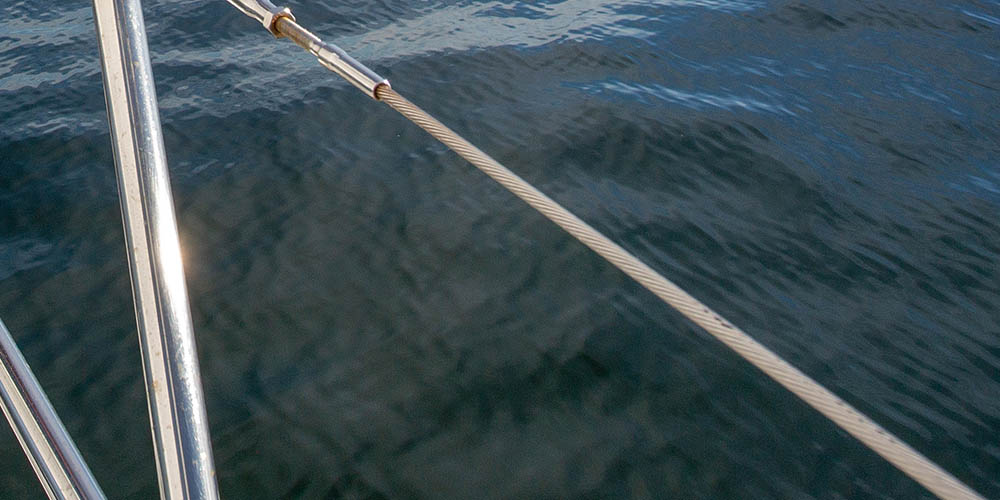
Detail of the lifeline from the photo above. Don’t even think of leaning against this dangerously rusted wire!
Uncoated 1 x 19 wire: 3/16" diameter uncoated wire is becoming more popular and is now required on offshore racing boats. Although a little harder on the hands and body when you lean against it due to its smaller overall diameter and rougher surface, it is easier to inspect for corrosion.
High-tech rope lifelines made from Dyneema line such as Samson AmSteel or New England Ropes' STS-WR2 are a third option. Although it’s lightweight, UV-resistant and extremely strong (7,400lb. tensile strength vs. 3,700lb. for 3/16" vinyl coated wire), Dyneema is not as protected against chafe as stainless steel wire but is very easy on the hands and body.
The best choice depends on how you use the boat. Cruising sailors often value comfort, durability and ease of inspection. Offshore racers may need to meet class or race requirements. Performance sailors may prefer Dyneema to reduce weight, while many owners prefer uncoated 1 x 19 stainless wire because corrosion and broken strands are easier to see.
The two ways to install a lifeline fitting onto a lifeline wire are swaging and hand crimping. Swaging is normally performed by a professional rigger or mast builder, because it requires a large swage tool. Hand crimping is accomplished with a hand swaging tool, sometimes referred to as a "Nicopress" tool.
Hand-crimped terminals can be owner-installed, saving the cost of hiring a professional rigger. The barrels on the hand-crimped terminals do end up looking a little lumpy, but they are strong and dependable when crimped with the right tool.
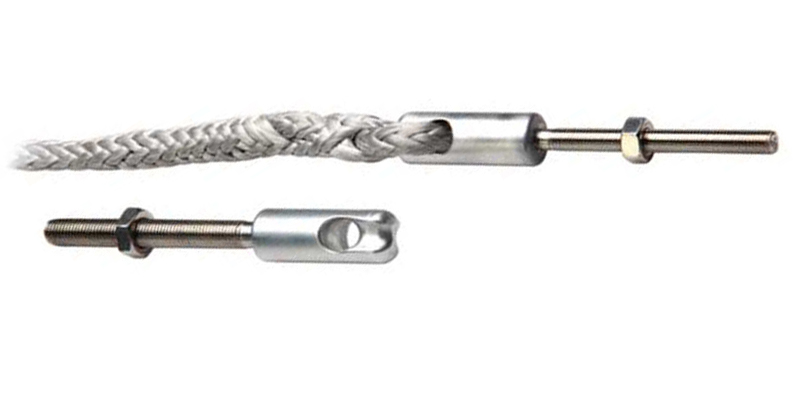 Splice Line Lifeline Fittings enable you to easily splice Dyneema line (which is 1/7th the weight and has the same strength and similar in cost to steel 1 x 19 cable) to standard fittings.
If you are a do-it-yourself type person who can splice line, you can easily make up new lifelines using Dyneema line and CS Johnson Splice Line Fittings. West Marine carries a full line of Johnson Marine Splice Line fittings for rope, hand crimp fittings for making your own wire lifelines, the proper tool for crimping the hand crimp fittings as well as both coated and uncoated wire and Dyneema line.
What size wire should you use?
Larger wire is safer, but it is also heavier. Lifeline wire has traditionally been available in 1/8" and 3/16" wire diameters (actual wire core measurement; the vinyl coating increases the diameter to 7/32" and 5/16" respectively). While larger wire is nicer to hang on to, and is stronger (3,700 lbs. vs. 1,760 lbs.), it is also heavy and oversized for small sailboats. For this reason, many boats use the smaller size.
For cruising boats, choosing a slightly larger lifeline can improve comfort and increase strength, provided the stanchions, pulpits, pushpits and attachment points are also strong enough. Oversizing only the wire does not improve safety if the deck hardware or terminals are worn, loose or undersized.
Sizing Lifeline Wire
Racing sailboats should follow the World Sailing Offshore Special Regulations 3.14.6, which are summarized as follows: Up to 28' LOA—1/8" wire; 28-43' LOA—5/32" wire; 43' LOA and up—3/16" wire.
These sizes are minimums; you can use larger sizes. 5/32" wire is not common in the US, but West Marine Rigging offers it on a custom basis since each terminal has to be built from separate component parts. Ask for a quote if you are interested in 5/32" wire lifelines. Cruisers are not affected by racing rules so they may elect to go with 3/16" on the upper and 1/8" on the lower lifelines.
NOTE: Lifelines require very specific measurements to ensure proper fit. It is important to know where to measure to, since different terminals are measured differently. This is a good reason to just send your lifelines to West Marine Rigging for an exact reproduction of the replacement. This project can be completed while the boat is hauled.
Before measuring, photograph each gate, terminal, turnbuckle, pelican hook and attachment point. Label port and starboard sections and note which end connects to the bow pulpit, stern pulpit or gate. If you remove old lifelines for duplication, keep the hardware orientation intact so the replacement can match the original layout.
Replacing Your Lifelines
If you determine that your lifelines need replacement and you want to use either the traditional vinyl coated wire or uncoated 1 x 19, the easiest option is to drop your old lifelines off at a West Marine store, or send them to a West Marine Rigging Shop and have the professionals at West Marine Rigging duplicate them. (Normally you can reuse your turnbuckles and pelican hooks, or you may want to upgrade to the newer Johnson Marine “over center” style pelican hooks.) Another option is to complete the Lifeline Measurement Form and fax or mail it to the West Marine Rigging shop.
Replacement is also the right time to inspect the whole lifeline system, not just the wire. Check stanchions for movement, inspect fasteners and backing plates, confirm pulpits and pushpits are secure, and replace any questionable turnbuckles, pelican hooks, split rings or toggles. A new lifeline attached to compromised hardware is not a safe system.
After installation, adjust tension so the lifelines are secure without overloading the stanchions. Gates should open and close cleanly, pelican hooks should lock reliably and all cotter pins, split rings or sharp ends should be taped to protect hands, sails and clothing.
Lifeline Replacement FAQs
How do I know when it's time to replace my lifelines?
Lifelines should be replaced if you notice corrosion, frayed or broken strands, discoloration, UV damage, or looseness that cannot be adjusted out. When inspecting stainless steel lifelines for corrosion, pay particular attention to where the wire enters the swage fitting. Regular inspections help catch these issues before they become safety hazards.
What are the advantages of Dyneema® lifelines compared to stainless steel wire?
While stainless steel remains the most popular choice for lifelines, high-tech Dyneema® rope lifelines weigh less than stainless steel lifelines, which makes them popular among competitive sailboat racers. They are lightweight, strong and do not rust like stainless steel lifelines. Compared to stainless steel, Dyneema has a softer feel, reducing abrasion on sails and hands. Dyneema should still be inspected regularly for chafe, UV exposure and splice condition.
Should I replace my lifeline turnbuckle bodies when installing new lifelines?
Oftentimes yes. Turnbuckle bodies should be inspected carefully when replacing lifelines. If they show signs of corrosion, wear, thread damage or distortion, they should be replaced to ensure a secure and reliable connection. Even if they appear to be in good condition, replacing old turnbuckles along with new lifelines can help prevent future issues and improve safety.
What’s the best way to attach fittings to stainless steel lifelines?
For maximum strength and an aesthetically pleasing look, we suggest professional swaging. Hand-crimped fittings can also be strong and dependable when installed with the correct tool and technique.
Are there specific regulations for lifeline materials and installation?
Yes. World Sailing Offshore Special Regulations and other race or safety standards may specify lifeline material, diameter, height and installation details, especially for offshore racing boats. Cruising sailors should still use these requirements as useful safety guidance even when not racing.
How do I maintain my lifelines to extend their lifespan?
Regularly inspect for wear, rinse with fresh water to reduce salt buildup and replace worn covers, terminals or fittings. For Dyneema®, check for chafe, UV degradation and splice movement. For stainless steel, watch for rust, cracked swages, broken strands and corrosion where wire enters fittings.
We're Here to Help!
Whether you need new lifelines, deck shoes, fishing gear, or anything else for your boat, West Marine has you covered. Shop online or visit one of our 230+ stores. Use our store locator to find the nearest West Marine location!


