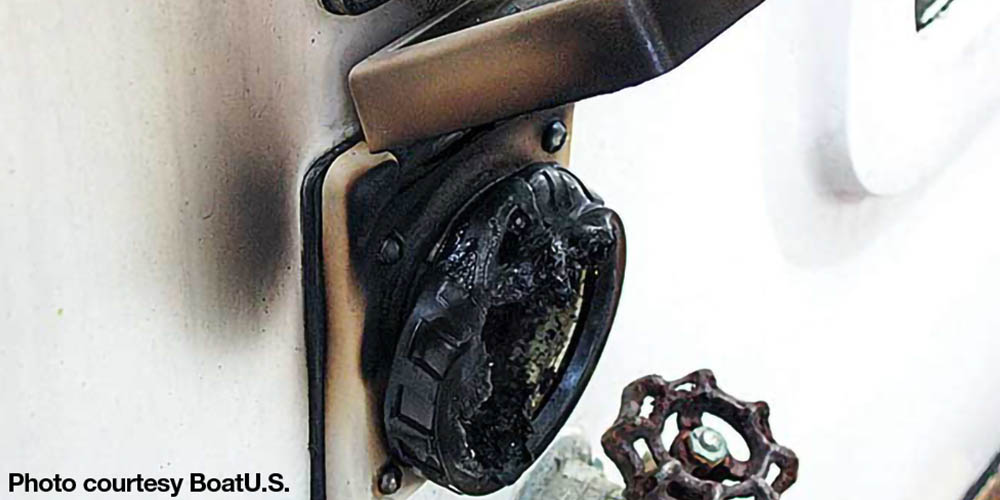
Warning Signs of Electrical Problems Aboard
Marine electrical failures rarely happen without warning. In many cases, boats provide early indicators long before a dangerous situation develops. Recognizing these signs can prevent equipment damage, electrical fires, expensive repairs, and potentially life-threatening emergencies.
Electrical systems aboard boats operate in one of the harshest environments possible. Moisture, vibration, salt exposure, temperature changes, and constant movement all accelerate wear on wiring, terminals, batteries, shore power systems, and electronic equipment. A problem that might be a minor inconvenience ashore can quickly become a major safety issue on the water.
- Burning plastic or insulation odors
- Warm electrical panels, switches, or breakers
- Discolored shore power plugs or receptacles
- Frequent breaker trips or blown fuses
- Corrosion on terminals or wiring
- Lights dimming when equipment starts
- Battery chargers running unusually hot
- Unexpected battery drain
- Mild electrical shocks near docks or swim ladders
- Intermittent operation of electronics or navigation equipment
If any of these symptoms appear, identify the cause immediately before further operation. Electrical issues rarely improve on their own and often become progressively worse over time.
Marine Electrical Safety Inspection Checklist
Perform these inspections at least annually and before extended cruising.
- Inspect shore power cords and connectors.
- Test all GFCI and ELCI devices.
- Inspect battery terminals.
- Check bonding and grounding systems.
- Inspect breaker panels and fuse blocks.
- Check wiring for chafe and abrasion.
- Verify charger and inverter connections.
- Inspect bilge blower operation.
- Review all recent electrical modifications.
- Confirm navigation and emergency systems operate correctly.
1. Undersized Wiring
Undersized wiring creates excessive resistance, heat buildup, voltage drop, and increased fire risk. The longer the wire run, the greater the effect. Many boats experience equipment failures that are actually caused by improper wire sizing rather than faulty equipment.
Why This Condition Is Dangerous
When wire gauge is too small for the current being carried, the conductor becomes a heating element. Excess heat damages insulation, accelerates corrosion, loosens terminals, and can ignite surrounding materials. Sensitive electronics, pumps, refrigerators, and navigation systems may also receive insufficient voltage and perform poorly.
How to Avoid It
- Follow ABYC wire sizing standards.
- Calculate voltage drop before installing equipment.
- Use marine-grade tinned copper conductors.
- Upgrade wiring when increasing electrical loads.
- Inspect older boats for undersized legacy wiring.
Glossary
Voltage Drop: The loss of voltage that occurs as current travels through a conductor.
Tinned Copper: Marine-grade wire coated with tin to resist corrosion.
2. Overloaded Circuits
Modern boats often have significantly more electronics than originally designed. Adding chartplotters, radar, refrigeration, lighting, inverters, and chargers without upgrading circuits can overload wiring and breakers.
Why This Condition Is Dangerous
Overloaded circuits generate heat continuously. Even if a breaker does not trip, long-term operation near capacity damages insulation, terminals, fuse holders, and switches. This degradation often goes unnoticed until smoke, melting, or fire occurs.
How to Avoid It
- Apply the 80% rule for continuous loads.
- Calculate total amperage before adding equipment.
- Install dedicated circuits for large loads.
- Inspect panels for signs of overheating.
- Replace damaged breakers and fuse holders.
Glossary
Continuous Load: An electrical load expected to operate for three hours or longer.
3. Loose Shore Power Connections
Shore power failures are among the leading causes of marina fires. A loose connection creates resistance which generates heat. Heat creates corrosion, corrosion creates more resistance, and the cycle continues until failure occurs.
Why This Condition Is Dangerous
Overheated plugs can melt connectors, ignite dock structures, and spread fire to neighboring boats. Many marina fires begin at a single shore power receptacle.
How to Avoid It
- Inspect shore power cords before every season.
- Use locking rings on connectors.
- Replace burned or discolored plugs immediately.
- Check for heat after operating under load.
- Keep all shore power connections clean and dry.
Glossary
Thermal Runaway: A condition where increasing heat causes increasing resistance which creates even more heat.
4. Improper Grounding and Bonding
Grounding and bonding systems protect both people and equipment. They provide a safe path for fault current and help control corrosion.
Why This Condition Is Dangerous
Improper grounding can energize metal rails, ladders, swim platforms, engines, and underwater hardware. It can also contribute to Electrical Shock Drowning and accelerated galvanic corrosion.
How to Avoid It
- Inspect bonding conductors annually.
- Verify continuity throughout the system.
- Investigate unexplained corrosion.
- Install galvanic protection where appropriate.
- Never disconnect safety grounds.
Glossary
Bonding System: A network of conductors connecting metal components together.
Electrical Shock Drowning: Paralysis caused by electrical current leaking into the water.
5. Inadequate Ground Testing
Why This Condition Is Dangerous
Many continuity tests only verify a connection exists. They do not verify that the conductor can safely carry fault current during an emergency. A grounding system may appear functional while still failing when needed most.
How to Avoid It
- Perform continuity and load testing.
- Use marine electrical diagnostic tools.
- Verify fault-current carrying capability.
- Document annual inspection results.
6. Ignition Sources Near Fuel Vapors
Gasoline vapor is heavier than air and settles into bilges and enclosed compartments where it may remain undetected.
Why This Condition Is Dangerous
A single spark from a switch, motor, relay, breaker, or electrical connection can ignite accumulated fuel vapors. Explosions can destroy a vessel instantly and cause severe injury or death.
How to Avoid It
- Run bilge blowers before startup.
- Inspect fuel systems for leaks.
- Use ignition-protected equipment.
- Investigate fuel odors immediately.
- Maintain proper ventilation.
Glossary
Ignition Protected: Equipment designed not to ignite surrounding fuel vapors.
7. Reverse Polarity
Why This Condition Is Dangerous
Reverse polarity can energize equipment that appears switched off and create hidden shock hazards. It can also damage electronics and defeat intended safety protections.
How to Avoid It
- Install reverse polarity indicators.
- Inspect shore power wiring regularly.
- Verify polarity after electrical work.
- Replace damaged connectors immediately.
Glossary
Reverse Polarity: Hot and neutral conductors connected incorrectly.
8. Improper Inverter and Charger Installation
Why This Condition Is Dangerous
Modern battery banks can deliver thousands of amps during a fault. Improper inverter and charger installations can cause overheating, grounding faults, electrical fires, and equipment damage.
How to Avoid It
- Follow manufacturer instructions.
- Use properly sized conductors.
- Install correct overcurrent protection.
- Provide adequate ventilation.
- Inspect installations annually.
9. Missing GFCI and ELCI Protection
Why This Condition Is Dangerous
Ground-fault protection devices disconnect power when dangerous leakage current is detected. Without them, fault conditions can continue until equipment damage, fire, or injury occurs.
How to Avoid It
- Install GFCI protection where required.
- Install ELCI protection at shore power inlets.
- Test devices monthly.
- Replace failed units immediately.
Glossary
GFCI: Ground Fault Circuit Interrupter.
ELCI: Equipment Leakage Circuit Interrupter.
10. Unsafe Use of Power Tools Around Fuel Systems
Why This Condition Is Dangerous
Many portable power tools generate sparks. In areas containing fuel vapors, these sparks can ignite an explosive atmosphere.
Shop vacuums are particularly dangerous because they actively pull flammable vapors through the motor housing.
How to Avoid It
- Ventilate spaces before maintenance.
- Eliminate fuel vapors before using tools.
- Never use a shop vacuum for fuel spills.
- Use explosion-proof equipment when required.
- Inspect fuel systems before repairs.
Frequently Asked Questions
What causes most boat electrical fires?
Loose shore power connections, overloaded circuits, corroded terminals, undersized wiring, and improper modifications account for the majority of marine electrical fires.
How often should a boat electrical system be inspected?
A complete inspection should be performed annually, with additional inspections before offshore passages or extended cruising.
What is the most dangerous electrical hazard in a marina?
Electrical Shock Drowning remains one of the most serious hazards because swimmers often become incapacitated before recognizing the danger.
Can corrosion create electrical hazards?
Yes. Corrosion increases resistance, generates heat, reduces current flow, and can lead to equipment failure or electrical fires.
Why do shore power plugs get hot?
Heat is typically caused by loose connections, corrosion, worn contacts, excessive load, or undersized conductors.