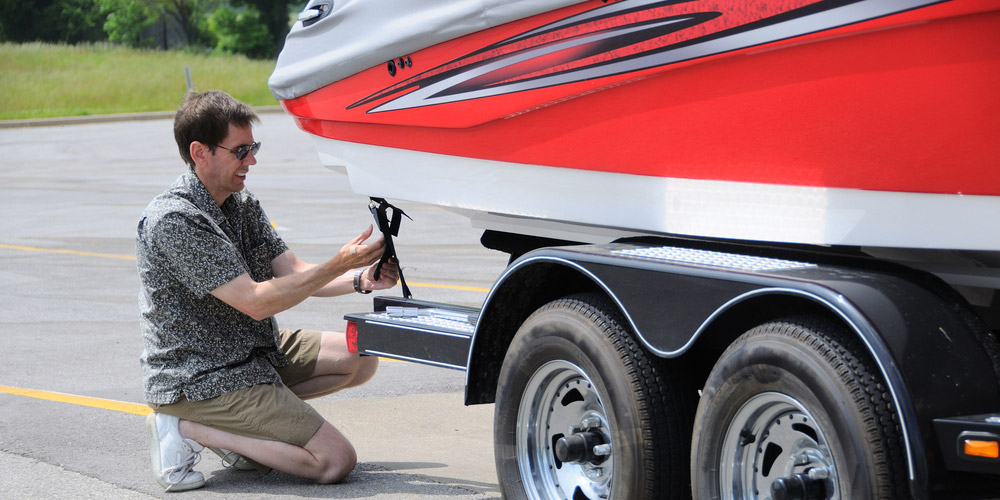
Trailering a boat safely involves much more than hooking up the trailer and heading to the ramp. Every year, preventable trailer failures, improperly secured boats, tire blowouts, wheel bearing failures, and launching mistakes result in expensive damage, delayed trips, and serious highway accidents. Developing a consistent pre-departure, launch, and retrieval routine helps eliminate mistakes and protects both your boat and everyone sharing the road.
This comprehensive boat trailering checklist covers every stage of the process—from preparing at home to launching at the ramp and securing your boat for the trip home.
- Before Leaving Home
- Before Launching
- Before Trailering Home
- Trailer Maintenance Essentials
- Highway Trailering Safety Tips
- Trailering Glossary
- FAQs
Before Leaving Home
The majority of trailering problems occur before you ever reach the boat ramp. A systematic inspection takes only a few minutes and can prevent breakdowns, accidents, or damage hundreds of miles from home.
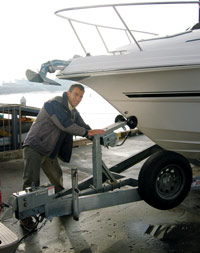
Checking the bow tiedown. Notice that the safety chains are criss-crossed, the Emergency Breakaway Cable is attached to the vehicle, and the trailer jack is retracted.
LED trailer lights offer greater reliability, improved visibility, and lower maintenance requirements.
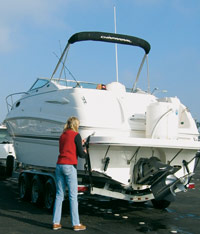
Inspect tiedown straps every trip. UV exposure and road vibration gradually weaken webbing and hardware.
Tires and Wheels
- Check tire pressure before driving. Trailer tires should always be inspected when cold.
- Inspect sidewalls for cracking, dry rot, bulges, cuts, or punctures.
- Verify tread depth and look for uneven wear patterns that may indicate alignment or suspension problems.
- Check spare tire pressure and condition.
- Inspect lug nuts for tightness and corrosion.
- Confirm wheel bearings are properly lubricated and bearing protectors contain the correct amount of grease.
Trailer Hitch and Coupler
- Confirm trailer ball size matches coupler specifications.
- Fully engage and lock the coupler latch.
- Install a safety pin or coupler lock.
- Verify the trailer sits level or slightly nose-down.
- Inspect hitch receiver, ball mount, and mounting hardware.
Safety Chains and Breakaway System
- Cross safety chains beneath the trailer tongue.
- Attach chains directly to the tow vehicle frame or approved attachment points.
- Connect the emergency breakaway cable independently from the safety chains.
- Inspect hooks, clips, and chain links for corrosion or wear.
Lighting and Electrical Systems
- Test brake lights.
- Test running lights.
- Test left and right turn signals.
- Verify reverse lights if equipped.
- Inspect connectors for corrosion.
- Check wiring harnesses for chafing or exposed conductors.
Boat Securement
- Inspect transom straps.
- Check bow eye connection.
- Verify bow winch strap condition.
- Inspect bow safety chain.
- Confirm all hatches are secured.
- Remove or secure loose gear.
- Secure coolers, anchors, batteries, and fishing equipment.
- Lower Bimini tops and antennas.
Outboard and Sterndrive Preparation
- Install motor support bracket.
- Raise the lower unit to transport position.
- Confirm hydraulic trim systems are not carrying the full weight of the engine.
Before Launching
Most ramp delays and launching mistakes occur because boaters attempt to complete preparation while occupying the launch lane. Prepare your boat in the staging area before backing down the ramp.
Ramp Staging Area Checklist
- Install the drain plug.
- Remove transom tiedowns.
- Leave the bow winch strap attached.
- Attach dock lines.
- Install fenders.
- Load safety gear.
- Raise antennas and electronics.
- Turn battery switch on.
- Check fuel levels.
- Verify navigation equipment operation.
Engine Preparation
- Run blower for four minutes on sterndrive and inboard boats.
- Inspect bilge for fuel odors.
- Prime fuel system on outboard-powered boats.
- Confirm cooling water intakes are unobstructed.
Launch Sequence
- Back down the ramp slowly.
- Set parking brake before exiting the tow vehicle.
- Remove bow safety chain.
- Release bow winch strap only when ready to launch.
- Guide the boat to the dock using attached lines.
- Move the tow vehicle promptly to designated parking.
Before Trailering Home
Retrieval is often rushed after a long day on the water. Following a consistent process prevents equipment damage and ensures a safe drive home.
- Center the boat on bunks or rollers.
- Attach bow strap and winch securely.
- Attach bow safety chain.
- Raise outboard or sterndrive.
- Install motor support bracket.
- Secure transom tiedowns.
- Lower antennas and Bimini tops.
- Reconnect trailer lights.
- Verify all lighting functions.
- Remove loose gear from deck and cockpit.
- Drain bilge water.
- Drain live wells.
- Drain bait tanks.
- Drain coolers.
Invasive Species Prevention
Many states require boaters to clean, drain, and dry vessels before leaving a waterway. Zebra mussels, quagga mussels, hydrilla, and other invasive species can spread through residual water and attached vegetation.
- Inspect hull and trailer.
- Remove weeds and vegetation.
- Drain all water systems.
- Wash boat and trailer when required.
- Allow equipment to dry before launching elsewhere.
Trailer Maintenance Essentials
Wheel Bearings
Wheel bearing failure remains one of the leading causes of roadside trailer breakdowns. Bearings should be inspected, serviced, and repacked according to manufacturer recommendations. Boats launched in saltwater environments typically require more frequent maintenance.
Trailer Brakes
Trailer brakes should be inspected annually. Check brake pads, hydraulic lines, actuators, brake fluid levels, and electrical connections. Corrosion is especially common on trailers exposed to saltwater.
Trailer Tires
Trailer tires typically age out before they wear out. UV exposure, heat cycling, and extended storage contribute to sidewall cracking and internal degradation. Replace aging tires even if tread remains acceptable.
Suspension Components
Inspect leaf springs, shackles, bushings, equalizers, and U-bolts regularly. Corrosion and metal fatigue can develop without obvious warning signs.
Highway Trailering Safety Tips
Weight Distribution
Proper tongue weight is critical for stable towing. Too little tongue weight increases the likelihood of dangerous trailer sway, while too much overloads the tow vehicle suspension.
Speed Management
Many trailer tire manufacturers recommend maximum speeds of 65 mph unless otherwise specified. Excessive speed increases tire temperatures, bearing temperatures, and stopping distances.
Following Distance
Allow additional stopping distance when towing. Boat trailers significantly increase total vehicle weight and braking requirements.
Mirror Adjustment
Proper mirror positioning allows continuous observation of trailer tires, wheel hubs, and traffic conditions.
Trailering Glossary
Bow Eye: Reinforced attachment point used to secure the boat to the trailer winch.
Breakaway Cable: Emergency cable that activates trailer brakes if the trailer separates from the tow vehicle.
Coupler: Mechanism that connects the trailer tongue to the hitch ball.
Tongue Weight: Downward force exerted by the trailer on the hitch.
Bearing Protector: Device that maintains grease pressure inside wheel hubs.
Transom Strap: Tie-down strap securing the stern of the boat to the trailer.
GVWR: Gross Vehicle Weight Rating; maximum allowable loaded trailer weight.
Frequently Asked Questions
Why should I run the blower before starting a sterndrive or inboard engine?
Gasoline vapors can accumulate inside enclosed engine compartments. Running the blower for at least four minutes helps remove potentially explosive vapors before starting the engine.
Why should safety chains be crossed?
Crossed chains create a cradle that supports the trailer tongue if the coupler disconnects from the hitch ball, reducing the likelihood of loss of control.
How often should wheel bearings be serviced?
Most boat trailers should have bearings inspected annually, with more frequent service for trailers used regularly in saltwater environments.
How tight should transom straps be?
Transom straps should be snug enough to prevent movement but not so tight that they place excessive stress on the hull or trailer structure.
Why do trailer tires fail so often?
Trailer tires spend long periods stationary, are frequently exposed to UV radiation, and often operate near maximum load ratings. Age-related deterioration is a common cause of failure.