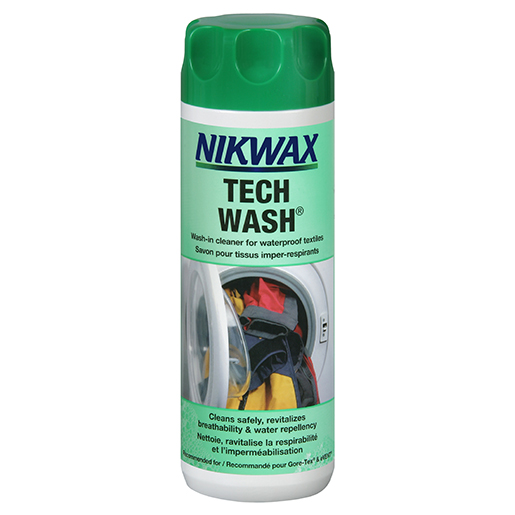
Nikwax Tech Wash® safely cleans and revitalizes the breathability and water repellency of foul weather gear.
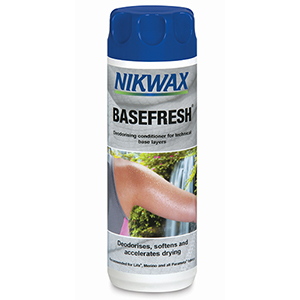
Nikwax Basefresh is a deodorizing conditioner for all technical underwear and wicking clothing worn next to the skin.
Technical boating clothing — your foul weather gear and the layers of specialized clothing you wear underneath — are wonderfully efficient, purpose-built garments. They’re somewhat expensive — OK, they can be just plain pricey — but great technical clothing really is worth the cost just when conditions become nasty. How can you keep your foulies and mid-layer garments doing their jobs for as long as possible? It’s easy. Just follow the label instructions on the inside of the garment and the instructions below, and you will improve the longevity of your gear.
- Cleaning Dos
- Cleaning Don’ts
- How to Remove Stains from Foul Weather Gear
- Restoring the Durable Water Repellent Coating
- Washing Foul Weather Gear
- Washing Heavily Soiled Foul Weather Gear
- How to Wash Boots
Cleaning Do’s
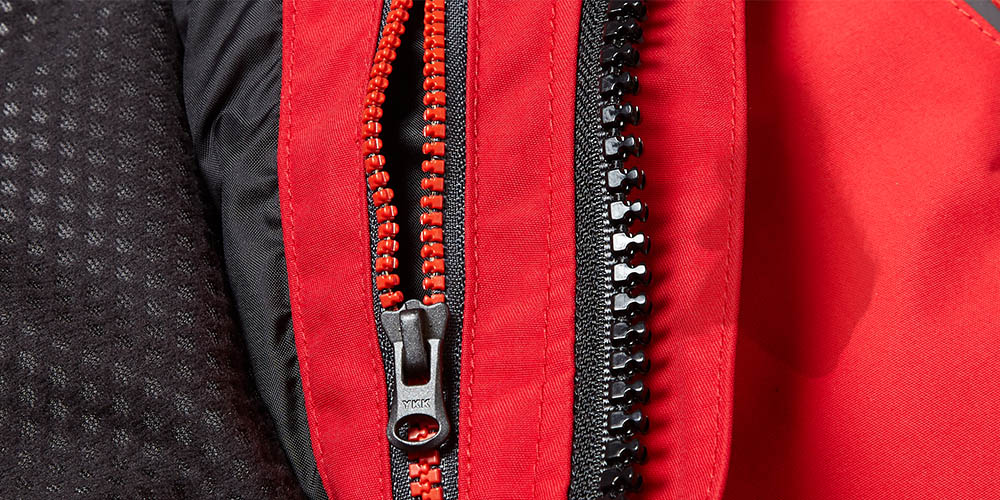
Outerwear garments: rinse fabric thoroughly and completely in fresh water after every use, even after freshwater sailing. Open and close all pop studs, zippers and snaps fully to flush salt out of the mechanism — salt crystals packed into zipper teeth and snap housings cause corrosion and premature failure of hardware that is expensive to replace. Remember that salt is a desiccant — it will actively attract and hold moisture against the fabric — so a good rinse is especially important after saltwater use. Hand wash separately with soap flakes, or machine wash on warm with a small quantity of mild powder detergent, using the delicate setting. Drip dry naturally, away from direct heat. Hanging the jacket open on a hanger in a ventilated space is ideal.
Base layers and technical apparel: machine wash at warm temperature. Do not use fabric softeners under any circumstances, because the conditioning agents coat the individual fibers and block the microscopic channels that allow moisture to wick away from the skin. A base layer treated with fabric softener may feel softer but will no longer move sweat effectively, defeating the entire purpose of technical underwear. Since these garments are quick drying, simply hang them up to dry rather than tumble drying, which reduces fiber degradation over time.
Cleaning Don’ts
Do not dry clean. Chemicals used in dry cleaning solvents — particularly perchloroethylene — dissolve the polyurethane or ePTFE laminates bonded to the fabric and destroy the waterproof membrane. One dry cleaning cycle can permanently ruin a jacket that cost several hundred dollars.
Do not use bleach. Bleach degrades synthetic fibers and attacks the DWR coating. Use powdered detergent sparingly and only when needed — excess detergent residue left in the fabric also damages DWR performance.
Do not wring. Twisting the fabric to remove water crushes and delaminate the bonded layers inside the garment. The outer fabric, membrane and inner lining are bonded under precise tension — wringing breaks that bond and causes the layers to separate, which creates cold spots, delamination bubbles and permanent reduction in waterproofing.
Do not store wet or salty. Leaving your gear damp or with salt residue causes mildew to colonize the fabric, which is extremely difficult to remove and causes permanent odor. It also accelerates corrosion of zippers and hardware. Store cleaned, thoroughly dried garments hung up loosely or folded loosely — never stuffed into a bag or locker while still damp.
Do not iron. The heat of an iron will melt the synthetic fibers and damage or destroy the waterproof membrane. If the garment wrinkles, hang it in a steam-filled bathroom — the moisture and heat together will release most creases without direct contact.
How to Remove Stains from Foul Weather Gear
The key principle for all stain removal on technical fabrics: act quickly, use gentle mechanical action, avoid heat until the stain is fully out, and never use bleach. Always treat the stain before machine washing — running the garment through a wash cycle with an untreated stain can set it permanently into the fabric.
Adhesive tape
Rub with ice to harden the adhesive, then scrape off the bulk with a dull knife. Sponge the residue with powdered detergent and warm water, then wash the garment normally.
Fish blood
Soak in cool water immediately — never warm or hot, as heat sets protein stains permanently. Rub the wet area with powdered detergent, rinse thoroughly, and wash normally. Fresh blood comes out easily; dried blood requires patience and multiple treatments.
Chewing gum
Harden with ice until brittle, then scrape off with a dull knife. Alternatively, soften with a small amount of egg white and peel away. Sponge the residue with detergent solution and wash normally.
Coffee, tea
Blot up as much liquid as possible immediately without rubbing. Soak the area with warm water, rub gently with powdered detergent, and clean with warm to hot water. Tannin stains respond best when treated while still fresh.
Deodorants
Deodorant buildup in the underarm area is one of the most common problems with technical base layers and inner lining panels on foul weather jackets. Scrub the affected area with undiluted white vinegar and let it sit for several minutes before rinsing. Follow with powdered detergent and clean with warm to hot water. Repeat if needed — deodorant residue can take multiple treatments to fully remove.
Fruits and juices
Soak with powdered detergent solution and wash normally. If the stain remains, apply white vinegar directly to the area, let it sit for a few minutes, then clean with warm to hot water. Citric acid in fruit stains responds well to the acidity of vinegar.
Grease
Scrape off all excess material with a dull knife without spreading the stain. Apply an absorbent powder — talcum or cornstarch — directly over the grease, press gently, and allow it to absorb for 15–20 minutes before brushing off. Treat the remaining stain with powdered detergent and clean with warm to hot water. Do not use petroleum-based solvents or spot removers, as they can damage synthetic fabrics and coatings.
Mildew
Rub the affected area with warm lemon juice and dry the garment in direct sunlight if possible — UV light kills mildew spores. Once dry, rub with powdered detergent and clean with warm to hot water. Severe mildew may leave a stain even after the mold is killed — the garment is hygienically clean but may show discoloration. If mildew recurs, the garment is not being dried completely before storage.
Mud
Allow mud to dry completely before attempting removal — wet mud smears and drives deeper into fabric fibers. Once dry, brush off as much as possible, then soak with powdered detergent and wash with warm water.
Restoring the Durable Water Repellent (DWR) Coating
The DWR coating is a fluoropolymer treatment applied to the outer face fabric of your foul weather gear during manufacturing. Its job is to cause water to bead up and roll off the surface rather than soaking into the fabric. When the DWR is functioning correctly, the outer fabric stays dry even in heavy rain — it’s the visual confirmation that your jacket is working as designed.
When the DWR fails, you will notice that the outer fabric begins to “wet out” — absorbing water rather than shedding it. This is uncomfortable because a saturated outer fabric conducts heat away from your body. More importantly, a wetted-out outer fabric reduces the ability of the waterproof membrane inside the jacket to breathe, which causes condensation to build up on the inside of the garment. You feel wet and clammy not because the jacket is leaking but because the membrane can no longer function properly with a water-saturated outer layer pressing against it.
DWR failure is often caused by contamination from body oils, sunscreen, insect repellent, and detergent residue — not by the coating wearing out. In many cases, washing the garment is enough to restore DWR performance. Heat from a tumble dryer on low-medium heat after washing also reactivates the DWR by re-orienting the fluoropolymer molecules that have been flattened by use. Try washing and drying before assuming the DWR needs chemical replacement.
Washing Foul Weather Gear to Restore DWR
- Wash the garment on gentle cycle with warm water and without detergent, or with a technical fabric cleaner like Nikwax Tech Wash, which cleans without leaving residue that damages DWR. Do not use fabric softeners, as they coat fibers and further degrade water repellency. Whenever possible, use a front-loading rather than a top-loading washing machine — the agitator in a top-loader can be unnecessarily harsh on laminated fabrics.
- Tumble dry on low to medium heat for about 30 minutes, unless the garment’s care label specifies line drying only. The heat reactivates the DWR — this step is as important as the wash for restoring water repellency. After drying, sprinkle a few drops of water on the outer fabric. If water beads up cleanly, the DWR has been restored. If it still wets out, proceed to chemical DWR restoration below.
- Alternatively, hand wash garments in a sink or tub. Fill with just enough water to cover the garment and add cleaner. Gently knead all areas to remove dirt and stains. Rinse thoroughly until the water runs completely clear — detergent residue left in the fabric is one of the most common causes of DWR failure.
Washing Heavily Soiled Garments
- Spot clean heavily soiled areas before machine washing. Apply a small amount of non-detergent soap directly to the soiled area, work it in gently with a soft brush or fingertips, and rinse before placing in the machine. Wash the garment on gentle cycle with warm water and a non-detergent soap if available, such as Revivex Synthetic Fabric Cleaner.
- Do not use liquid detergent. Liquid detergents contain emulsifiers that leave a residue on synthetic fibers and are particularly damaging to DWR coatings. Do not use fabric softeners. Stick to powdered or specifically formulated technical fabric cleaners.
- Tumble dry on low to medium heat for about 45 minutes, unless the care label specifies line drying only. The additional drying time compared to lightly soiled garments is needed to ensure the garment is fully dry through all layers before storage.
In most cases, washing will be enough to remedy a temporary failure of the DWR. However, after extended use in extreme conditions — or after the garment reaches the end of its DWR service life — you may experience permanent failure that washing alone cannot reverse. When permanent failure occurs, follow these additional steps:
- Wash the garment following the instructions above and ensure it is completely clean before applying any DWR restoring product.
- Treat with a product designed to restore the DWR, such as Henri Lloyd HL Renew, Musto’s Grangers XT DWR Replacement, or Nikwax TX.Direct. These products are applied to a damp garment in the washing machine or by hand, not to a dry one — follow the specific product instructions carefully.
- The use of a spray-on DWR is not strictly necessary if you use a wash-in treatment, but combining both can increase effectiveness and provide more even coverage on high-wear areas like shoulders and forearms. Revivex Water Repellent for Outerwear is one effective spray-on option. Apply spray-on products to a clean, damp garment and follow with heat from a hair dryer or tumble dryer.
- Maintain the DWR going forward by cleaning the garment regularly. Dirty garments lose DWR performance faster than clean ones. Henri Lloyd products are rated to retain 80 percent of DWR performance after 20 home launderings when care instructions are followed correctly.
How to Wash Boots
Rubber Boot Care
Rubber deck boots are durable but will degrade prematurely if neglected. Salt, UV exposure and petroleum-based products all accelerate breakdown of rubber compounds, causing the material to stiffen, crack and eventually fail at seams.
- Rinse thoroughly after every use in fresh water, inside and out. Salt residue draws moisture and accelerates material breakdown. Pay particular attention to the inside of the boot where sweat and salt both accumulate.
- Wash with mild soap and water when rinsing alone isn’t enough to remove grease, fish slime or heavy contamination. Avoid petroleum-based cleaning products — they soften and degrade rubber.
- Dry thoroughly in a cool, shaded location before storing. Hang boots on a boot rack, use a boot dryer on a low setting, or stuff loosely with newspaper to absorb internal moisture. Remove inner footbeds during drying to speed the process and prevent mildew growth between the footbed and the boot lining. Never dry in direct sunlight or near a heat source — UV exposure and heat both dry out and crack rubber prematurely.
- Treat regularly with a rubber conditioner. A rubber conditioner restores oils that prevent stiffening and cracking and extends boot life significantly. Apply at the start and end of each season as a minimum, and more frequently if the boots see heavy use.
Breathable Boot Care
Cleaning
Breathable boots — those with Gore-Tex or similar waterproof-breathable membranes — require more careful cleaning than rubber boots because the membrane can be damaged by harsh chemicals. Remove salt and grit by rinsing under a tap or hose with fresh water before any dirt has a chance to dry and abrade the outer material. Clean the outside with a warm non-detergent soap solution applied with a soft cloth or soft brush and rinsed thoroughly. Use a stiffer brush only on heavily soiled areas where stubborn grit is embedded — brush gently in one direction to avoid pushing debris deeper into seams. The inside of the boot can be cleaned with fresh water and a small amount of non-detergent soap. Wipe the interior thoroughly with a damp cloth to remove excess water, and allow to drain with the boot upside down for several minutes before drying.
Drying
Breathable boots must be allowed to dry naturally, away from any direct heat source. Forced or direct heat will delaminate the waterproof membrane from the boot lining just as it damages foul weather jacket membranes. Place wadded newspaper inside the boots to absorb moisture and speed drying time — change the newspaper every few hours if the boots are very wet. For best results, dry for at least 48 hours before wearing or storing. Storing breathable boots while still damp inside is a common cause of mildew growth and premature odor that is difficult to remove.
Protecting
Once fully dried, treat the outside of the boot with an appropriate shoe care product. For leather upper boots, Nikwax Leather Conditioner or a similar product softens the leather, prevents cracking and adds a degree of water repellency to the outer surface. For synthetic upper boots, use a product specifically formulated for synthetic fabrics or Gore-Tex footwear. Conditioning the upper at the start and end of each season, and after heavy use periods, significantly extends the life of the boot and maintains the outer material’s flexibility and water resistance. Browse West Marine’s full selection of foul weather gear and marine footwear.
Foul Weather Gear Care FAQ
The clearest sign is that the outer fabric “wets out” — absorbs water rather than beading it up and shedding it. A jacket with functioning DWR will show water beading cleanly on the surface in rain. When DWR fails, the outer fabric darkens and saturates. You may also feel clammy inside the jacket even though the waterproof membrane itself has not failed, because a saturated outer layer prevents the membrane from breathing properly. Try washing and tumble drying on low heat first — in many cases this restores the DWR without needing any chemical treatment.
Avoid liquid detergents — they contain emulsifiers that coat synthetic fibers and damage DWR coatings. If you must use a general detergent, choose a powdered formula and use it sparingly. The best option is a technical fabric cleaner like Nikwax Tech Wash, which is formulated specifically to clean performance fabrics without leaving any residue that compromises waterproofing or breathability. Never use fabric softener on foul weather gear or base layers under any circumstances.
Fabric softener works by coating individual fibers with a lubricating layer, which makes the fabric feel softer. Unfortunately, that same coating blocks the microscopic channels that allow moisture to move through technical wicking fabrics, and it coats the DWR treatment on outer shells in a way that prevents water from beading and rolling off. A single wash with fabric softener can significantly reduce the performance of a technical base layer and damage the DWR on an outer shell that might otherwise last for years with proper care.
Rinse with fresh water after every use, and wash properly when the garment becomes visibly dirty or when you notice DWR performance declining. Paradoxically, washing foul weather gear regularly actually maintains DWR performance longer than washing infrequently — body oils, sunscreen, salt and general contamination are the primary causes of DWR failure, and removing them regularly prevents the gradual buildup that eventually saturates and destroys the coating. Most manufacturers recommend washing every 3–5 uses during active sailing seasons.
Yes, on low to medium heat — and it is actually recommended after washing to reactivate the DWR. The heat from the dryer re-orients the fluoropolymer molecules in the DWR treatment, restoring their ability to repel water. Use low or medium heat only and tumble for 20–30 minutes. Never use high heat, which can damage or melt synthetic fibers and delaminate the waterproof membrane. Check the garment’s care label — a small number of garments specify line dry only, and those instructions should be followed.