Understanding Marine VHF Coaxial Cable
Many boaters focus on selecting a quality VHF radio and antenna but overlook the component that connects them: the coaxial cable. In reality, even the best antenna cannot compensate for signal loss caused by poor cable selection, improper installation, corrosion, or low-quality connectors. The coaxial cable is the transmission line that carries radio frequency (RF) energy from your VHF radio to the antenna and returns received signals back to the radio.
The quality, length, condition, and installation of your coax cable directly affect communication range, signal clarity, DSC distress transmission reliability, AIS performance, and overall marine radio effectiveness. A poorly installed coax system can reduce transmitted power dramatically and limit your ability to communicate during routine operations or emergencies.
How Coaxial Cable Works
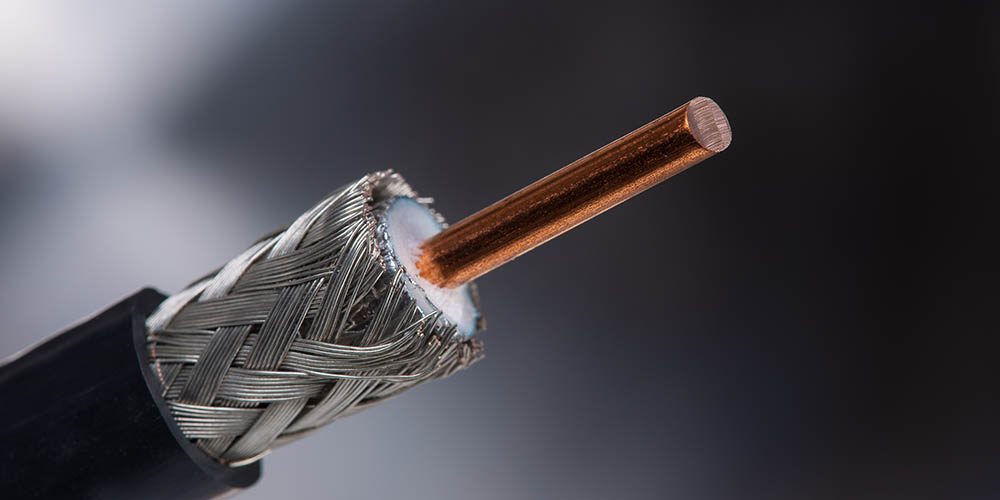
Coaxial cable consists of four primary components:
- Center Conductor: Carries the radio frequency signal.
- Dielectric Insulator: Maintains spacing between conductors.
- Shield Braid: Prevents signal leakage and outside interference.
- Outer Jacket: Protects the cable from moisture, UV exposure, abrasion, and environmental damage.
The term "coaxial" refers to the shared center axis between the conductor and shield. This design allows radio frequency energy to travel efficiently while minimizing interference and signal degradation.
Marine VHF systems operate around 156-162 MHz and require a cable with a characteristic impedance of 50 ohms. Using the wrong cable type can create impedance mismatches that reduce radio performance and increase standing wave ratio (SWR).
Why Signal Loss Matters
Every foot of coax cable introduces some degree of attenuation, commonly referred to as signal loss. As radio frequency energy travels through the cable, a portion is converted into heat and never reaches the antenna.
Unlike many electrical systems, VHF radio performance is extremely sensitive to signal loss. Even a few decibels of attenuation can noticeably reduce effective communication range.
Most fixed-mount marine VHF radios transmit approximately 25 watts. Any power lost in the coax never reaches the antenna and cannot be recovered later. While high-gain antennas improve signal concentration, they cannot restore energy already lost in the transmission line.
Marine VHF Coax Cable Types
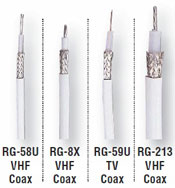
We offer three common 50-ohm marine coaxial cable types:
- RG-58CU
- RG-8X
- RG-213
RG-58CU
RG-58CU is the smallest and most flexible of the commonly used marine VHF coax cables. It is often found in smaller boats, compact installations, and short cable runs where routing flexibility is important.
Advantages include:
- Easy installation
- Flexible routing
- Lower cost
- Suitable for shorter runs
Disadvantages include higher signal loss over longer distances.
RG-8X
RG-8X represents an excellent balance between size, flexibility, and performance. Many marine installers consider it the preferred choice for typical recreational vessels.
Advantages include:
- Lower loss than RG-58CU
- Reasonable flexibility
- Easier installation than RG-213
- Suitable for most boats
RG-213
RG-213 provides the lowest signal loss among the three options and is often used on larger vessels, commercial installations, offshore boats, and sailboats with tall masts.
Advantages include:
- Lowest attenuation
- Maximum transmit power delivery
- Superior receive sensitivity
- Excellent long-distance performance
The tradeoff is increased diameter, weight, and routing complexity.
Signal Loss Comparison
| Coax Size vs. Signal Loss at 200 MHz Frequency | |||||
|---|---|---|---|---|---|
| Cable: | 20' | 40' | 60' | 80' | 100' |
| RG-58CU | -1.2dB | -2.4dB | -3.6dB | -4.9dB | -6.1dB |
| RG-8X | -0.9dB | -1.8dB | -2.7dB | -3.6dB | -4.5dB |
| RG-213 | -0.5dB | -1.0dB | -1.6dB | -2.1dB | -2.7dB |
Choosing the Right Cable Size
The general rule for marine VHF installations is simple:
Use the largest coax cable that can reasonably be installed.
Longer cable runs benefit the most from larger coax. A center-console boat with a short antenna lead may perform well with RG-8X, while a sailboat with a masthead antenna may realize significant performance gains from RG-213.
For offshore vessels where maximum communication range can become a safety issue, minimizing transmission losses should be a priority.
How Coaxial Cable Affects VHF Range
VHF radio range depends on several factors:
- Antenna height
- Antenna gain
- Transmit power
- Receiver sensitivity
- Environmental conditions
- Coaxial cable losses
While increasing antenna height often provides the greatest range improvement, reducing cable losses ensures more power reaches the antenna in the first place.
For example, a poorly installed coax system can reduce effective transmitted power by more than 50%, substantially reducing communication distance.
Coaxial Connectors and Splices
One of the most common causes of poor VHF performance is improperly installed connectors.
Marine VHF systems commonly use:
- PL-259 connectors
- PL-258 barrel connectors
- SO-239 antenna connectors
Whenever possible, avoid unnecessary splices. Every connection introduces potential loss, corrosion points, and failure opportunities.
If a splice is unavoidable, use:
- Proper PL-259 connectors
- A PL-258 double-female coupler
- Marine-grade waterproof sealing methods
Never twist wires together, crimp conductors without RF connectors, or use household electrical connectors.
Water Intrusion: The Silent Performance Killer
Water intrusion is one of the leading causes of marine VHF system failures.
Once moisture enters the coax braid, it travels surprisingly far through capillary action. This process, known as wicking, allows water to migrate inside the cable where it causes corrosion that may remain hidden for years.
Symptoms of water-damaged coax include:
- Reduced transmit range
- Weak reception
- Intermittent radio performance
- High SWR readings
- Corrosion visible at connectors
When severe water intrusion occurs, replacing the cable is usually more effective than attempting repairs.
Protecting Marine Coax Connections
Every exposed connector should be protected from water intrusion.
Recommended protection methods include:
- Silicone dielectric grease
- Marine heat-shrink tubing
- Adhesive-lined heat shrink
- Self-amalgamating waterproof tape
- Marine-grade sealing compounds
Particular attention should be given to:
- Masthead connections
- Radar arches
- T-top installations
- Bilge areas
- Deck penetrations
- External antenna mounts
Installing a PL-259 Connector
The quality of the connector installation often determines the overall quality of the VHF installation.
Common installation methods include:
- Traditional soldered PL-259
- Compression connectors
- Crimp-style connectors
- Center-pin connector systems
A properly installed connector maintains the cable's impedance, minimizes signal reflection, and protects against moisture intrusion.
Marine VHF Coaxial Cable Glossary
Attenuation: Signal loss that occurs as RF energy travels through a cable.
Coaxial Cable: A transmission line designed to carry radio frequency signals.
Dielectric: The insulating material separating the center conductor and shield.
dB (Decibel): Measurement used to quantify signal gain or loss.
Impedance: Electrical characteristic that must match between radio, cable, and antenna.
PL-259: Standard connector used in marine VHF installations.
PL-258: Double-female coupler used for coax splicing.
RF: Radio Frequency energy transmitted and received by the radio system.
SWR: Standing Wave Ratio; a measurement of system efficiency.
Wicking: Water migration through the braid inside coax cable.
Frequently Asked Questions
Can I use TV coax cable for a VHF radio?
No. Most television coax uses 75-ohm impedance while marine VHF systems require 50-ohm cable. Using the wrong cable can significantly reduce radio performance.
What is the best coax cable for a VHF radio?
RG-213 provides the lowest signal loss, while RG-8X offers an excellent balance of performance and flexibility for most recreational boats.
How often should marine coax cable be replaced?
Quality marine coax can last many years if protected from UV exposure and water intrusion. Replacement is recommended if corrosion, moisture contamination, or performance issues are discovered.
Does a longer coax cable reduce range?
Yes. Every foot of coax introduces some attenuation. Longer cable runs benefit from larger low-loss cable types such as RG-213.
Can a bad connector affect radio performance?
Absolutely. Poorly installed connectors can create major signal losses, high SWR readings, intermittent performance, and reduced communication range.
We're Here to Help
Whether you're installing a new VHF radio, upgrading an antenna system, replacing aging coaxial cable, or troubleshooting communication problems, choosing the right cable and connectors is critical to maximizing radio performance. West Marine offers marine-grade coax cable, PL-259 connectors, antennas, VHF radios, AIS equipment, and installation accessories to help build a reliable communications system for your boat.