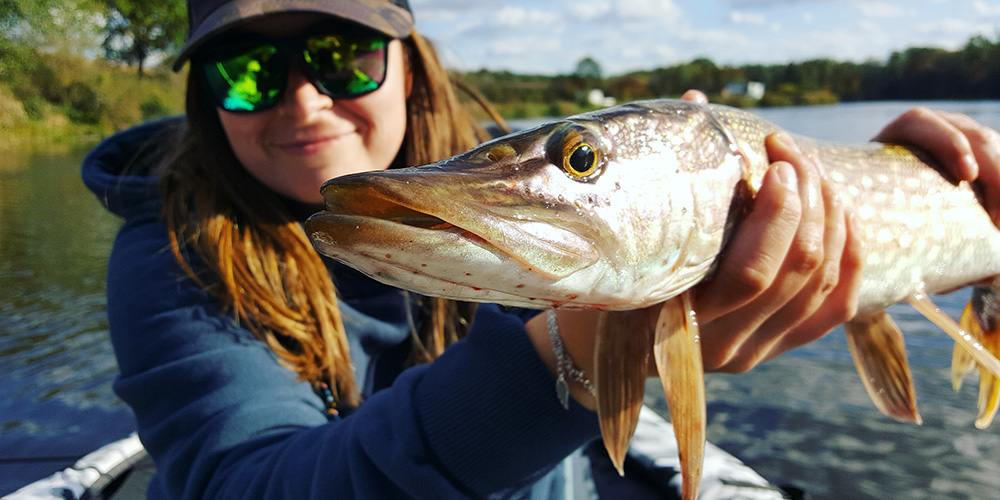
A bad day of fishing is still better than a good day at the office.—Author unknown.
According to the U.S. Fish and Wildlife Service, in 2022, 39.9 million people age 16 and over enjoyed fishing in the United States. The immense popularity of fishing stems from the many benefits it offers. From spending quality time with family and friends, relaxing away from the stress of everyday life to lessons in patience and perseverance, fishing has a lot to offer.
If you're a non-angler eager to try your hand at fishing but don't know where to begin, this article is for you. From selecting a fishing rod and reel, to terminal tackle, fishing regulations, and tips and techniques for catching fish, our goal is to help you get started right.
- Rod and Reel Combos
- Light, medium or heavy action — what’s best?
- How to Cast With a Spinning Reel
- Terminal Tackle
- Baits and Lures
- Do you need a fishing license?
- Tips to Catch More Fish
- Conclusion
- We’re Here to Help!
Rod and Reel Combos
For your first setup, we suggest that you purchase a fishing rod and reel combo. The big advantage to purchasing a combo is that apart from being relatively inexpensive, combos match their reels to rods of the correct action and length for a "balanced setup". Choices include conventional, baitcasting and spinning combos.
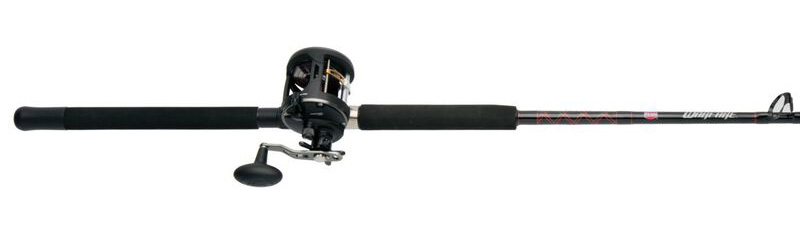 Penn Level Wind Conventional Combo
Conventional Combos: These are a good choice for trolling or for bottom fishing from a boat or pier.
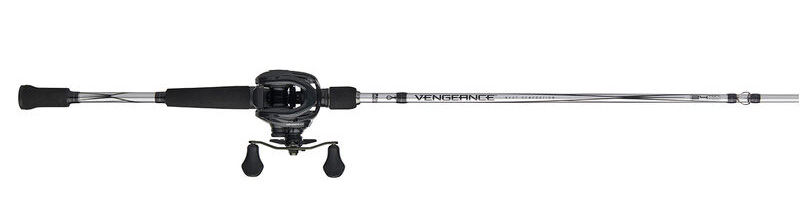 Abu Garcia Vengence Baitcasting Combo
Baitcasting Combos: These work great for precision casting and are the number one choice of bass anglers.
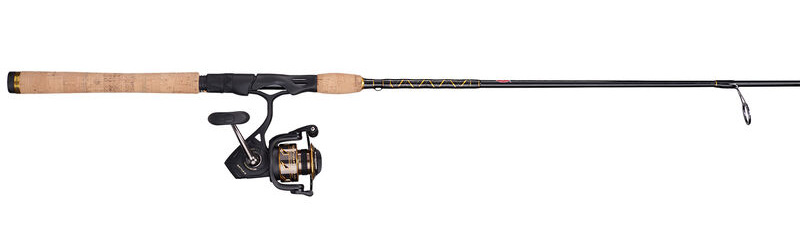 Penn Battle III Spinning Combo
Spinning Combos: These are the beginner’s best choice for casting lures and jigs from a boat or from the bank of a river or lake. In a pinch however, they can be used for bottom fishing or in the case of heavy-action models, for trolling. Their main advantage is that they are the easiest for a novice to cast and for that reason, spinning combos are our number one pick for those who have never fished.
Light, medium or heavy action — what’s best?
When selecting a rod and reel combo, consider the following factors to decide between light, medium, or heavy action:
Target Fish Species
- Light-action: Ideal for small fish like panfish and trout.
- Medium-action: Suitable for bass, walleye, and smaller catfish.
- Heavy-action: Best for large fish like pike, muskies, and big catfish.
Lure and Bait Type
- Light-action: Works well with small lures and live bait.
- Medium-action: Can handle a wider range of lures and bait sizes.
- Heavy-action: Designed for large lures and heavy baits.
Line Strength
- Light-action: Supports lighter lines (4-8 lb. test).
- Medium-action: Suitable for moderate lines (8-14 lb. test).
- Heavy-action: Requires strong lines (15+ lb. test).
How to Cast With a Spinning Reel
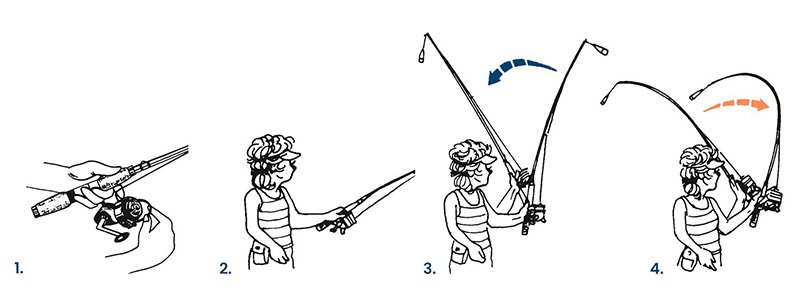
Making a successful cast with a spinning reel is a matter of technique and timing. The most critical point in the process comes at the end of Step 4, when you must release the line at just the right moment towards the end of your cast. With practice, you will learn to feel that moment and the process will become automatic. (Illustration and accompanying text adapted from Casting an Open-bail Spinning Reel, USFWS, Public Domain)
- Grasp the rod’s handle, placing the reel’s stem, between your middle fingers. Rotate the body of the reel to where the line roller on the bail is the closest to the rod. With the tip of your index finger grab the line where it leads out from the line roller. With your other hand, fold the bail into the open position.
- With the line suspended from tip of your index finger, extend the rod forward.
- With the line still suspended from your finger tip, quickly draw the rod back and then, without stopping. . .
- Quickly whip the rod forward in the direction you want to cast. Just before the rod fully straightens out, release the line from your finger tip. This last action is much like an archer releasing an arrow — and if you have ever practiced archery, you will notice that it feels much the same.
Terminal Tackle
Once you’ve purchased your rod and reel combo, you’re going to need terminal tackle that is appropriate for the type of fishing you plan. Terminal tackle refers to the components that are attached to the end of your fishing line, such as hooks, sinkers, swivels, bobbers, leaders, and other components.
In order to set up your terminal tackle rig, there are several fishing knots that you will need to know. These are the Palomar knot, the uni knot and the double uni knot. For a series of videos on how to tie these knots, see our West Advisor article How to Tie Three Essential Fishing Knots.
Here are four examples of terminal tackle rigs and uses for each:
Carolina Rig
The Carolina Rig allows the bait to move freely and naturally, making it ideal for covering large areas and fishing various depths. It’s effective for fish that are bottom-dwelling or suspended just above the bottom.
Components:
- Egg or Bullet Sinker: Sliding sinker to allow the line to move freely.
- Bead: Protects the knot from the sinker and adds a clicking noise.
- Swivel: Connects the main line to the leader line and prevents line twist.
- Leader Line: Typically 12-24 inches of monofilament or fluorocarbon.
- Hook: Offset worm hook or extra-wide gap (EWG) hook.
- Soft Plastic Bait: Worm, lizard, creature bait, or crawfish imitation.
Setup:
- Main Line: Thread the egg or bullet sinker onto the main fishing line, followed by a plastic or glass bead.
- Swivel: Tie the main line to one end of the swivel.
- Leader Line: Tie a 12-24 inch leader line to the other end of the swivel.
- Hook: Attach the hook to the end of the leader line.
- Bait: Rig the soft plastic bait onto the hook, ensuring it sits straight and weedless.
Target Species: Largemouth bass, smallmouth bass, spotted bass, catfish.
Surf Rig
Surf rigs are used for holding bait in place in turbulent surf conditions while presenting the bait naturally to fish. The sliding sinker allows fish to take the bait without feeling the weight, increasing hook-up rates. Pyramid sinkers help anchor the rig in the sandy surf.
Components:
- Sliding Sinker: Typically a 2–4 ounce pyramid or egg sinker that slides on the main line.
- Bead: Placed between the sinker and swivel to protect the knot.
- Swivel: Prevents line twist and acts as a stopper for the sinker.
- Leader: A length of heavier line, typically 18-36 inches.
- Hook: Size and type depend on the target species; often a circle or J-hook.
Setup:
- Main Line: Thread the sliding sinker onto the main fishing line.
- Bead: Slide a bead onto the line after the sinker to protect the knot.
- Swivel: Tie the main line to one end of the swivel.
- Leader: Attach the leader to the other end of the swivel.
- Hook: Tie the hook to the end of the leader.
Target Species: Striped bass, flounder, redfish, bluefish, and other surf-dwelling species.
Texas Rig
The weedless setup of Texas rigs enables use for fishing in heavy cover without snagging, which maxes Texas rigs ideal for targeting bass hiding in vegetation, brush, or other structures.
Components:
- Bullet Sinker: Cone-shaped, designed to slide on the main line.
- Hook: Offset worm hook or extra-wide gap (EWG) hook.
- Soft Plastic Bait: Worm, creature bait like a crawfish imitation.
Setup:
- Main Line: Thread the bullet sinker onto the main fishing line with the pointed end facing up.
- Hook: Tie the hook to the end of the main line.
- Bait: Insert the hook into the top of the soft plastic bait, exit after about a quarter inch, then rotate the hook and reinsert it so the bait sits straight and weedless.
Target Species: Largemouth bass, smallmouth bass, spotted bass, catfish.
Split Shot Rig
The split shot rig is simple and versatile, allowing you to quickly adjust the weight and placement of the sinkers. It’s effective for presenting bait naturally, making it ideal for targeting fish at various depths and in different conditions.
Components:
- Split Shot Sinkers: Small, removable weights that can be attached to the fishing line.
- Hook: Usually a small bait hook, suitable for live bait or soft plastic baits.
- Bait: Live bait such as worms or minnows, or soft plastic baits.
Setup:
- Main Line: Tie the hook to the end of the main fishing line.
- Split Shot Sinkers: Attach one or more split shot sinkers to the main line about 6-12 inches above the hook. The exact distance can be adjusted based on the fishing conditions.
- Bait: Attach live bait or rig a soft plastic bait onto the hook.
Target Species: Bluegill, crappie, perch, trout, bass.
Baits and Lures
Fishing lures and baits include hard baits, soft baits, swim baits, and of course inert natural and live baits, the latter of which are always a good choice for catching fish. To determine which baits are “hot” in your area, we suggest that you check your local fishing reports, speak with an experienced friend or consult with a West Marine crew member at a West Marine store near you.
Do you need a fishing license?
If you are an adult, the answer is yes. However, certain states offer a discount to seniors, military veterans and disabled persons. Also, in all states, children are not required to have a fishing license. In most states, age 16 is the cutoff age for this, however this varies by state. Another exception are “free fishing days” which states offer to promote the sport of fishing and allow people to try it without the usual licensing requirements. For all questions related to licensing requirements and fishing regulations, check your state’s fish and game department’s website.
Tips to Catch More Fish
Research and Plan
- Know Your Target Species: Understand the habits, preferred habitats, and feeding patterns of the fish you're targeting. This helps in selecting the right bait and fishing spots.
- Check Local Conditions: Look up local fishing reports, weather conditions, and water levels. Fish activity can be influenced by these factors.
Use the Right Gear
- Match the Hatch: Use bait and lures that mimic the natural prey of the fish in your area. This can include local insects, minnows, or other small fish.
- Select Appropriate Tackle: Use the right rod, reel, and line for the type of fish you're targeting. Light tackle for small fish, heavier tackle for larger species.
Master Your Techniques
- Casting Accuracy: Practice casting to improve your accuracy and distance. Accurate casting can place your bait in the most promising spots.
- Variety of Retrieves: Experiment with different retrieval speeds and patterns to find what triggers strikes. Some fish respond better to a slow, steady retrieve, while others prefer erratic movements.
Timing is Everything
- Early Morning and Late Evening: Fish are often more active during these cooler parts of the day, especially in warmer months.
- Tidal Influence: For saltwater fishing, plan your trips around the tides. High tide can bring fish closer to shore, while low tide might expose feeding areas.
Location, Location, Location
- Structure and Cover: Fish often congregate around structures like rocks, submerged logs, weed beds, and drop-offs. These areas provide shelter and attract prey.
- Current Breaks: In rivers and streams, fish often hold in areas where the current slows down, such as behind boulders or in eddies.
Use Live Bait
- Fresh and Local: Live bait can be highly effective. Use local bait like worms, minnows, or crickets that the fish are accustomed to eating.
- Proper Hooking: Ensure your live bait is hooked properly to keep it lively and attractive to fish.
Stay Stealthy
- Minimize Noise: Fish (and other anglers) can be easily spooked by loud noises. Keep your movements quiet and avoid unnecessary noise.
- Blend In: Wear clothing that blends with the environment and avoid casting shadows over the water.
Pay Attention to Details
- Sharp Hooks: Keep your hooks sharp. Dull hooks can result in missed strikes and lost fish.
- Adjust Your Setup: Be ready to change your rig, bait, or location if you're not getting bites.
Learn From Others
- Observe Local Anglers: Watch and learn from more experienced anglers. Pay attention to their techniques, gear, and chosen spots.
- Join a Community: Fishing clubs, forums, and social media groups can be valuable sources of tips and local knowledge.
Practice Patience
- Stay Positive: Fishing requires patience and persistence. Stay focused, keep trying different approaches, and enjoy the experience even when the fish aren't biting.
Conclusion
Fishing is a fantastic way to relax, have fun, and connect with nature. Start by getting the right rod and reel combo, learn some basic terminal tackle setups, and make sure you’re familiar with local fishing regulations. Be patient, practice your skills, and enjoy the process. Each fishing trip is a chance to learn and improve. Happy fishing!
We’re Here to Help!
West Marine is the perfect place to get ready for your next fishing trip. From the latest in fishing reels, to free line spooling and locally assorted tackle in most of our stores, we have the expertise you need to get ready. Use our store locator to find a store near you.
Related: