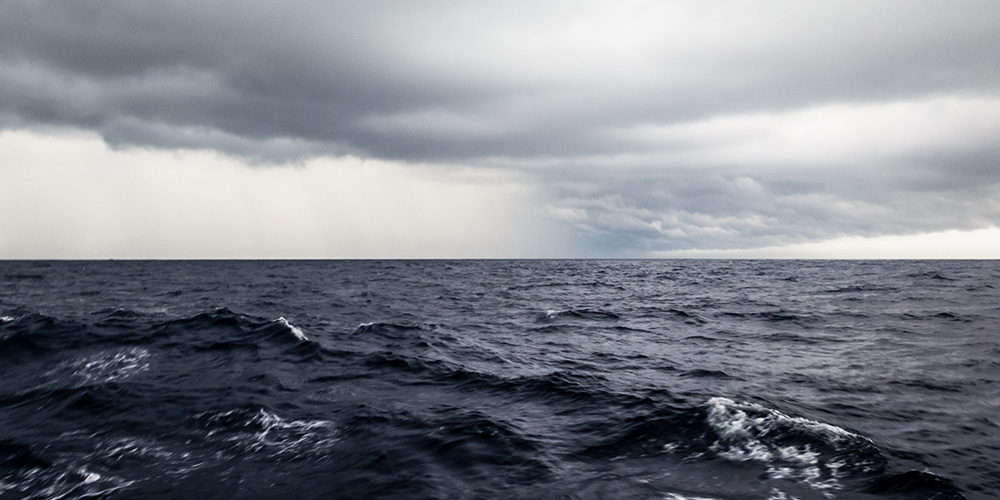
What happens when a routine offshore delivery goes catastrophically wrong? For Brandon Perry — an experienced boater with 25 years on the water — a straightforward 170-mile run from North Palm Beach, Florida to Treasure Cay in the Bahamas turned into a 12-hour ordeal involving dual engine failure, 6-to-8-foot seas, a waterspout, and the very real possibility of never being found. This is a true account of how one decision — borrowing an EPIRB before departure — saved his life, and what every offshore boater can learn from it.

When Brandon Perry left North Palm Beach, Florida in a 31-foot center console boat, he had every intention of reaching Treasure Cay in the Bahamas that night. It was a simple trip — he was delivering the boat for a friend. In the course of his 25 years of boating, he had made the crossing roughly 100 times before on boats of this design and size.
Boating was a family activity while growing up on the Florida coast. Each preparation step came from rote memory. The boat was ready. Supplies were stowed. The fuel and water tanks had been filled. To Brandon, the trip wasn't much different from a road trip to visit a friend for the weekend — and someone else was picking up the fuel bill.
But this wasn't going to be a smooth road trip.
Normally a safe route
From North Palm Beach, Treasure Cay is about 170 miles away and usually takes six hours at cruising speed. It is a route completed by boaters of widely varying experience in everything from sportfishers to small open center console outboards — there is even a group of jet skiers that makes an annual Bahamas run. The seas are normally calm enough for 30-foot open boats to cruise at 30 to 40 knots and outrun any building weather.
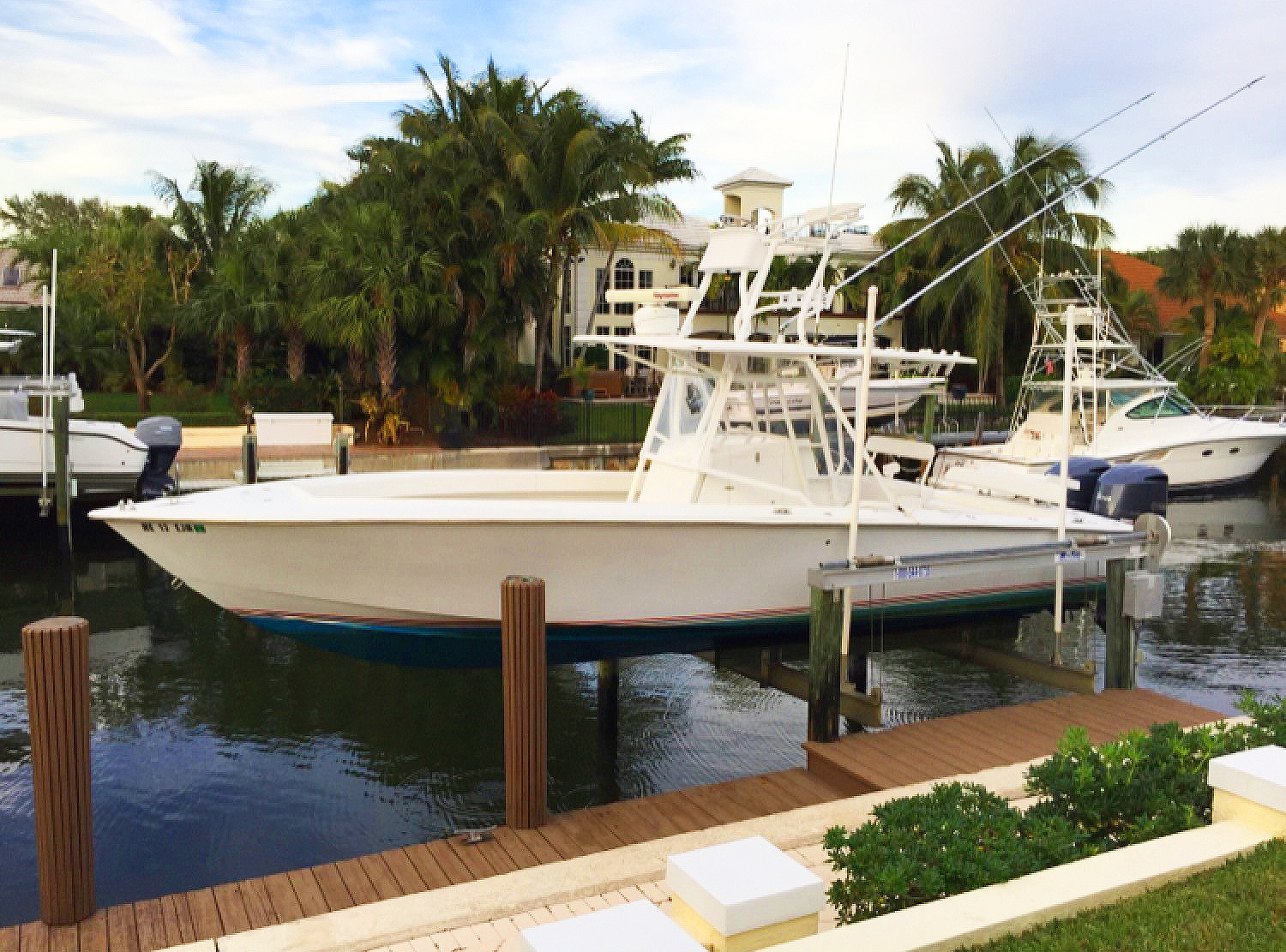
The Jupiter 31 Brandon was delivering was more than enough boat for the journey. The deep-V hull quieted the chop while tall topsides kept passengers dry in moderate waves. Twin outboards sipped fuel from tanks with a range well over 170 miles. Compared to the jet-ski club's annual run, this was going to be luxurious.
The night before the trip, Brandon collected the boat from a yard after some repairs. The next morning he ran a three-hour shakedown cruise to check all systems. Everything performed as expected. One discovery from his equipment inventory: the Jupiter had no Emergency Position Indicating Radio Beacon (EPIRB) aboard.
Borrowing a friend's EPIRB
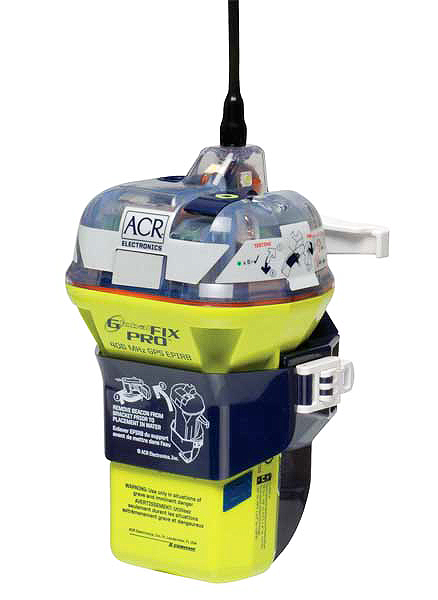
Having always traveled with one, Brandon reached out to a friend to borrow his ACR GlobalFix™ Pro EPIRB for the trip. He picked it up, loaded all the gear headed to Treasure Cay, and topped off the fuel tanks. A weather check showed a small storm moving in, but the Jupiter could easily outrun it in the current calm seas. Even if it caught up, it wasn't expected to be significant.
With the final checks made, Brandon set off for Treasure Cay at two in the afternoon.
Skipping across the water at 40 knots — loaded with a wheelbarrow, tires, and household items destined for the boat owner's Bahamian home — the Jupiter was making excellent time. Then, about three-quarters of the way to the Bahama Bank, the engines began to act up. Then the electronics.
Losing both outboards
Brandon backed off the throttles to assess the situation. At that point both outboards died. There was an eerie noise from the outriggers. His assessment: he had entered a statically charged zone from a lightning strike nearby or overhead. The static energy had knocked out the electronics and caused the fuel tanks to vacuum lock, leaving him adrift in the Florida Straits.
Eventually, drawing on his knowledge of the twin Yamahas, he got one engine running and adjusted course to the nearest landfall: West End.
The trip had fundamentally changed. Running on a single engine, unable to get on plane, he was reduced to slogging along at seven knots — painfully into four knots of current. Brandon was going nowhere fast, and the storm he had planned to outrun was catching up. The wind began to build. Then the seas.
The weather deteriorates
Darkness was falling. The seas had grown to 6-to-8 feet with wind gusts around 30 mph. The storm was pushing him further from West End. He changed course again — this time for Great Sale Cay — hoping to get out of the weather and make another attempt at the disabled engine.
“I readjusted my course and prepared myself for what would end up being the longest night of my life,” Brandon said.
He labored toward Great Sale Cay through driving rain and lightning, with giant claps of thunder overhead. Waves were crashing over the bow and flooding the deck beyond the capacity of the scuppers and bilge pumps.
At 2am — 12 hours into the journey — the weather began to ease. The winds calmed and the rain let up, though the seas remained stirred. For another couple of hours, the Jupiter limped along and was approaching Great Sale Cay when the single working engine began to act up again.
Exhausted and running out of options, Brandon reluctantly dropped anchor and attempted to sleep.
A waterspout
“Ten minutes into my sleep, the weather was shifting in a way that would alarm any mariner. The wind died down for a moment, which I found odd. I got up from the deck and looked up at the clouds. What I saw was the start of a waterspout,” Brandon said.
He grabbed the EPIRB and took shelter in what little space was available under the center console, among the dish soap, toilet paper, and canned goods destined for the Bahamas.
“It ripped around and across the boat for what felt like an eternity,” he said. Brandon remained hunkered down until daybreak — approximately two and a half hours later.
Running out of options
With morning light, he explored every remaining option for repairing the engines. All possibilities had been exhausted. Brandon turned to the VHF to hail any nearby vessel and relay a Mayday to the U.S. Coast Guard. No response. He tried his cell phone — both the mainland and Bahamian towers were out of range.
Brandon was reluctant to activate the EPIRB at first. He didn’t want to alarm family and friends. But after evaluating the circumstances clearly — the search area was expanding by the hour, the seas were still rough, and his chances of being spotted without a beacon were shrinking — he made the call.
Brandon activated the EPIRB.
A long 40 minutes
A Coast Guard cutter was within 15 miles of Brandon’s coordinates and arrived at the Jupiter 40 minutes later — what Brandon described as a very long 40 minutes.
“Mentally, when you have triggered the EPIRB, you are ready to be saved,” he said.
In most survival stories, the survivor is an ill-prepared individual who takes unnecessary risks that put them in danger. Brandon was not that type of survivor. He had drawn on 25 years of boating experience, made every reasonable preparation, and stacked the deck in his favor before leaving North Palm Beach. He was undone by a sequence of events that no amount of experience or preparation could have fully prevented.
Ultimately, his survival came down to one decision made before he ever left the dock: borrowing an EPIRB when he realized the Jupiter wasn’t equipped with one.
“I truly believe that having the EPIRB is what saved my life.”
Too many boaters do not carry locating beacons and don’t think to take one along — and these are the survivors who make the headlines. Using Florida as an example: only approximately 15% of registered recreational vessels in the state have an EPIRB, according to ACR Electronics, based on Florida DMV vessel registrations compared with NOAA registered beacon numbers. Florida has more registered recreational vessels than any other state — a record held for at least eleven consecutive years.
Cost is the most commonly cited barrier. But EPIRBs are relatively inexpensive — most fall in the same price range as the premium coolers most boaters wouldn’t leave the dock without. While a quality cooler offers some flotation in an emergency, it provides no help coordinating a rescue from 170 miles offshore.
The other barrier is psychological: it is easier to justify the expense of keeping beer cold for tomorrow’s trip than to spend money on equipment you hope never to use. Brandon understood the value in having one for what was supposed to be a routine trip. It saved his life — and that is something no price tag can capture. Just ask his family.
Carry an EPIRB on every offshore trip
Brandon’s story is a reminder that offshore emergencies can happen to experienced, well-prepared boaters. An EPIRB is the one piece of equipment that can summon a rescue from anywhere on the ocean when VHF, cell service, and other boaters are all out of reach. West Marine carries a full selection of EPIRBs and personal locator beacons from ACR Electronics and other leading brands — including the ACR GlobalFix Pro that Brandon used.
Shop all EPIRBs and locator beacons at West Marine>>
EPIRB and offshore survival FAQ
Brandon experienced simultaneous engine failure and electrical disruption mid-crossing, which he attributed to a statically charged zone from a nearby lightning strike. Both outboard engines shut down, leaving him adrift roughly three-quarters of the way across the Florida Straits to the Bahamas.
An Emergency Position Indicating Radio Beacon (EPIRB) transmits a 406 MHz distress signal to COSPAS-SARSAT satellites when activated. The signal relays the beacon’s GPS coordinates to a rescue coordination center, which dispatches the nearest Coast Guard or rescue vessel. EPIRBs work anywhere on the ocean — no cell coverage or VHF range required.
The boat Brandon was delivering had not been fitted with an EPIRB. Recognizing the risk before departure, he borrowed an ACR GlobalFix Pro EPIRB from a friend — a decision that ultimately saved his life. It underscores the importance of verifying safety equipment on any vessel before an offshore passage, even as a delivery skipper.
Conditions deteriorated from calm to 6-to-8-foot seas with 30 mph gusts, driving rain, and frequent lightning strikes. During the night, a waterspout passed directly over the anchored boat. The storm lasted most of the night, making navigation and communication with the Coast Guard or other vessels impossible.
Brandon first attempted engine repairs, hailed other vessels on VHF, and tried his cell phone — exhausting every alternative. He was also reluctant to alarm family and friends. He activated the EPIRB only after concluding the search area was growing rapidly and his chances of being found without the beacon were diminishing.
A U.S. Coast Guard cutter was within 15 miles of Brandon’s coordinates and arrived on scene within 40 minutes of EPIRB activation — demonstrating how effectively the system works when used correctly.
Only approximately 15% of registered recreational boats in Florida carry an EPIRB, according to ACR Electronics, which compared Florida DMV vessel registrations with NOAA registered beacon numbers. Florida has more registered recreational vessels than any other U.S. state.
The U.S. Coast Guard requires EPIRBs on certain classes of commercial vessels but does not currently mandate them on most recreational boats. However, the USCG strongly recommends them for any offshore passage, and experienced offshore mariners widely consider them essential safety equipment regardless of the legal requirement.
Most recreational EPIRBs fall in the same price range as a premium marine cooler. Entry-level Category II manual EPIRBs start around $250 to $350, while GPS-equipped Category I automatic models like the ACR GlobalFix Pro range from $400 to $600. For equipment capable of summoning a rescue from anywhere on the ocean, they represent exceptional value as life-safety gear.
The ACR GlobalFix Pro EPIRB that Brandon used is available at West Marine stores and at WestMarine.com. The specific unit in this story was purchased at the West Marine North Palm Beach store. West Marine carries a full range of EPIRBs and personal locator beacons from ACR Electronics and other leading manufacturers.